Crederrei, se fussi di sasso
-
-
Radically emancipated(s) is a direct antecedent of Martellata_14.09.91. The first project addresses the theft of fragments of works of art. These are commonly understood as vandalism, but somewhere between the sublime and the poetic, they are perpetrated as exercises of deep communion and admiration with the artists and / or the artworks.
A series of videos, objects and documents inquire into the different and individual reasons why some spectators feel a drive for carrying out such particular appropriations: fetishism, an act of cannibalism, the wish, an erotic compulsion, an irreverent gesture against the strict codification of the exhibition space, the intention to put the artwork into circulation, to know more about the artist, complicity, … In order locate the particularities of such acts, while differentiate from white glove thieves, I searched for the social history of art, the artistic reception and the conventions that condition it. In this way, and as can be seen in the publication No Touching, I studied cases of vandalism, destruction and theft of works. At the same time, I approached gallery settings (museums and architectures of display) as a network and chain of agreements, conventions and rituals that shape and affect visitors and personnel in terms of their behaviour, routines and performances.
Through Martellata_14.09.91 I will address for the first time a case of vandalism “by definition”[1], and one of the most paradigmatic cases of the 20th century by its transcendence into the global public sphere. Furthermore, the project represents a turning point in my artistic practice in terms of working in relation to Renaissance Art, classical monumentality and heritage in the public space that is in turn an identity of the city.
It will be through the completion of Martellata_14.09.91 that I will be able to inquire about my main thesis objective. Therefore I will know if I can (or how far I can) propose an artistic and theoretical re-reading of a radical and unconventional attitude that is considered unacceptable and problematic by the artistic institution.
As for the approach and interview with Piero Cannata, it will be the first time that I will work with a person who has repeatedly attempted against different works of art[2]. Martellata_14.09.91 will not only set a precedent for future collaborations and projects, but it will also mean working with a very particular person in terms of his dissident relationship with the art. In short, Cannata embodies the central subject of study of my body of work as an artist and researcher.
In relation to the formalizations, it will also be the first time that I will do a sculptural work of reflection on the destruction / construction of a stone, matter and culture. On the other hand, the outputs of the research will involve a particular application / adaptation of specific knowledge and instruments related to the disciplines of geology, conservation and restoration.
As for the publication, and in spite of having previously worked with editorial proposals, the book Martellata_14.09.91 will put me into the challenge of creating a story/essay; with the inclusion of ‘elements of fiction’ that will appeal to the memory of matter and build a narration from macro-micro perspectives.
–
[1] The term vandal was coined by Abel Gregóire during the French Revolution to designate those attackers of art or monuments. The aim was to condemn the vandals as barbarians in order to protect the threatened objects while uniting the French with the idea of a “national heritage”. The term has been subsequently extended in terms of its meanings and applications in different cases of destruction of art, especially in respect to the recent events related to the Islamic State and other sort of conflicts.
[2] Cannata has vandalized a total of 7 works between 1991 and 2005. The first was Michelangelo’s David. Then the fresco Le estequie di Santo Stefano by Filippo Lippi at the cathedral of Prato (October 1993); L’Adorazione dei pastori by Michele di Raffaello delle Colombaie in Santa Maria delle Carceri (December 1993); Watery Paths by Jackson Pollock at the Galleria d’arte moderna di Roma (May 1997); the Gentiluomo a cavallo by Marino Marini in the homonymous museum in Florence (February 2000); and the gravestone to Girolamo Savonarola in the Piazza della Signoria in Florence (October 2005).
-
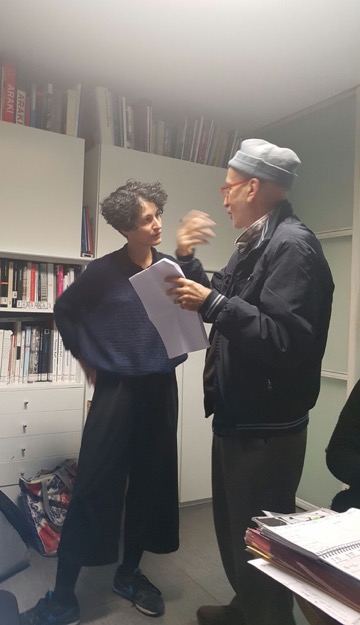
First encounter with Piero Cannata. In gallery Dryphoto Arte Contemporanea, Prato. November 2016
I contacted Piero Cannata three years after the curator Alba Braza explained me that she knows him. He is a sporadic visitor of Dryphoto Arte Contemporanea in Prato (Italy), a gallery where she works for a specific project that takes place every November.
When thinking about what Alba Braza explained me time ago, I decided that the research project Martellata_14.09.91 would be one of the main components of my doctoral thesis Behaving Unconventionally in Gallery Settings. It motivated me to continue inquiring into understanding the plurality of functions that artworks perform, the different attitudes and relationships that they generate, and the conflicts that also arise between or out of them. But first of all I had to agree about my intentions with Cannata.
After a few inquiries and some coordination, I managed to meet him in November 2016. We held two long conversations; the main objective was to approach his particular reality[1] and to create a bond of trust and confidence. After talking about ancient and contemporary art -and above all- listening to his achievements as a mathematician and ‘grammatologist’[2], I got his permission for researching the case. After that I asked him a couple of questions. He replied that he gave a soft hammer blow to the statue and that the marble -contrary to what he had imagined- was very soft. Then he explained that with the attack had the intention of announcing that he had created a new Italian grammar.
Contrary to that statement of November 2016, I had already read in an online newspaper that Piero Cannata had declared on September 14, 1991 – immediately after his act – that La Bella Nani by Paolo Veronese had asked him in his recurring dreams to make such a gesture[3]. After the first approach to the case study, I reaffirmed my first objective: to investigate phylogenetically the iconoclastic act. I then set the goal of studying all events, individuals and actants directly and indirectly involved by it. Therefore I coordinated the access to institution’s archives, interviewed professionals and studied “objects of information inscription”, understanding that matter -through its alterations of state, transformations and accidents- stores memory and also points to the events that have taken place.
Therefore, in the course of 2017 – 2019, during the data compilation phase, I accessed the archives of: Consiglio Nazionale delle Ricerche, Opificio delle Pietre Dure i Laboratori di Retauro, Tribunale Superiore di Firenze, Gipsoteca dell’Istituto d’Arte di Firenze, Fondazione Michelangelo Buonarroti, and Biblioteca Nazionale Centrale di Firenze. I also met Piero Cannata and different professionals such as Franca Falletti (director of the Galleria dell’Academia during 1992 – 2013), Angelo Tartuferi (current scientific expert and deputy director of the Galleria dell’Academia), Marzia Marigo (secretary of the archive of the Galleria dell’Academia), Cinzia Parnigoni (restorer), Susanna Bracci (scientific restorer of the CNR), Fabio Fratini (scientific restorer and geologist of the CNR), Annamaria Giusti (art historian and director of restoration of the OPD), Luigi Davitti (cast technician of the Gipsoteca). In addition, in the summer of 2018, I visited the different external and internal quarries of Carrara, its workshops (including the Michelangelo and TorArt Laboratories), the marble technical schools with their directors and teachers, as well as the museums and art centers of Carrara.
On the other hand, and after a second meeting with the restorer Cinzia Parnigioni in July 2018, I verified that two of the seven fragments detached from the sculpture were used for crystallographic and petrographic analyses[4]. The scientific information obtained by the Consiglio Nazionale delle Ricerche (CNR) was decisive for two key aspects about the David: 1) the identification of the extraction site of the block in Carrara: the Fantiscritti quarry; and 2) the preservation state of the sculpture: it became evident that the marble was cotto. The fact that the stone had lost its initial chemo-crystalline properties and that, therefore, was very fragile, determined and indicated the action of the general restoration of the sculpture during 2002-2004.
Subsequent to the second encounter with the restorer Cinzia Parnigoni, I understood that the formalizations of Martellata_14.09.91 had to be the result of a dys-position[5]. That is to say, an initial chronological disorganization of all points of view on the event that would set up a dialogue between the different spaces, times, subjects and agents involved, so to generate a plot of comprehension about ‘the attack’ that, as mutivocal stories, would shape the artistic outputs.
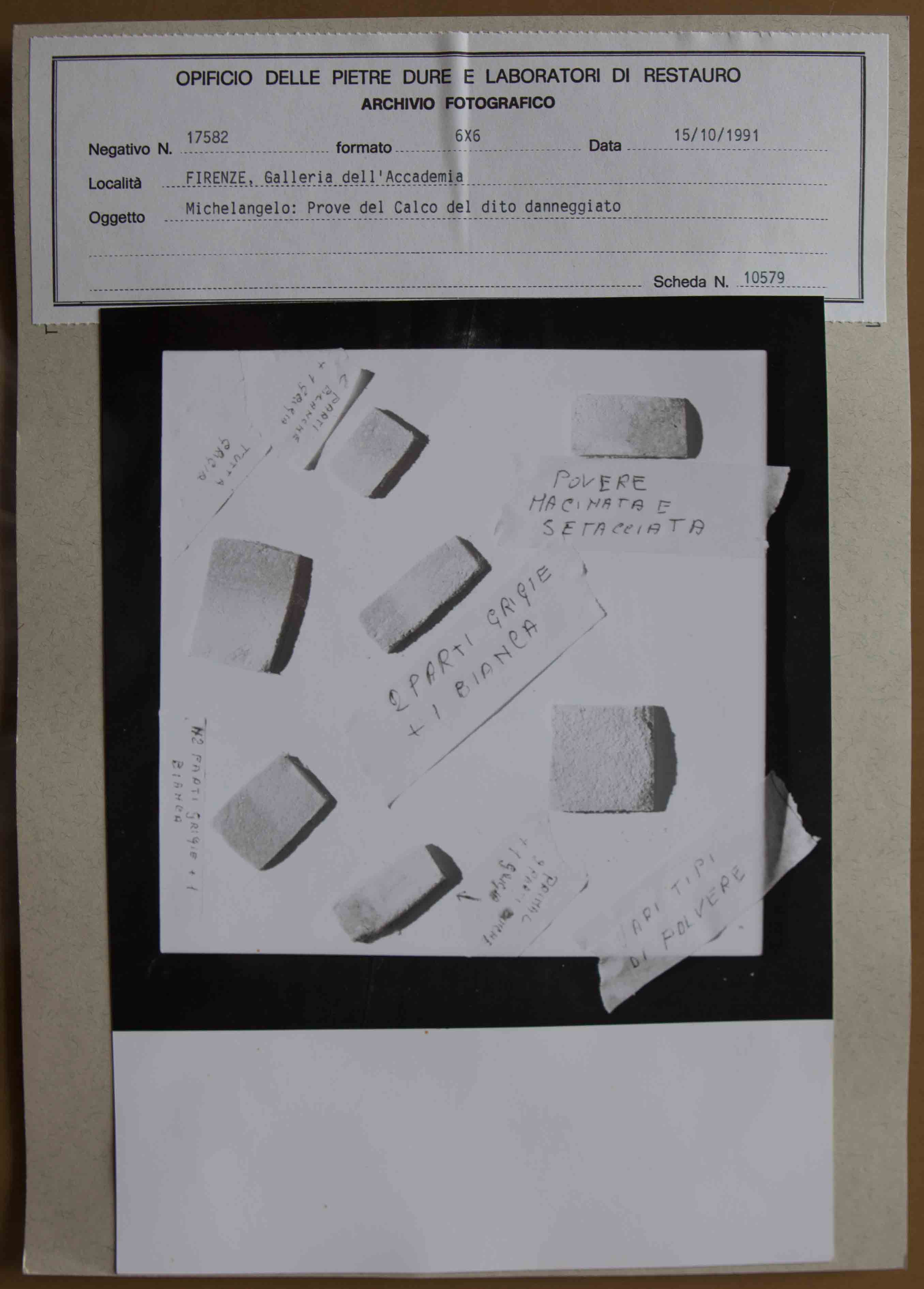
When in November 2018 I accessed the files of the Opificio delle Pietre Dure e Laboratori di Restauro, I found the photograph taken by the restaurateur Roberto Nesti that documents the seven marble fragments. The enclosed technical sheet describes that the smallest piece had the size of a coffee bean, and the largest the dimensions of an almond. Neither that photograph, nor the technical sheet, nor the article published in the OPD magazine in December 1991, documented how much powder was also detached from the sculpture, although the article mentioned that some was generated. What the texts definitely did not point out was the release of marble micro-particles in the air, as a result of the attack.
Micro-particles are solid fragments that, due to their tiny size, are invisible to the human eye. They can vary in their behaviour: for example, those higher than 125μm could take 10 years to touch the ground while those below 90μm would be suspended in the air almost forever.
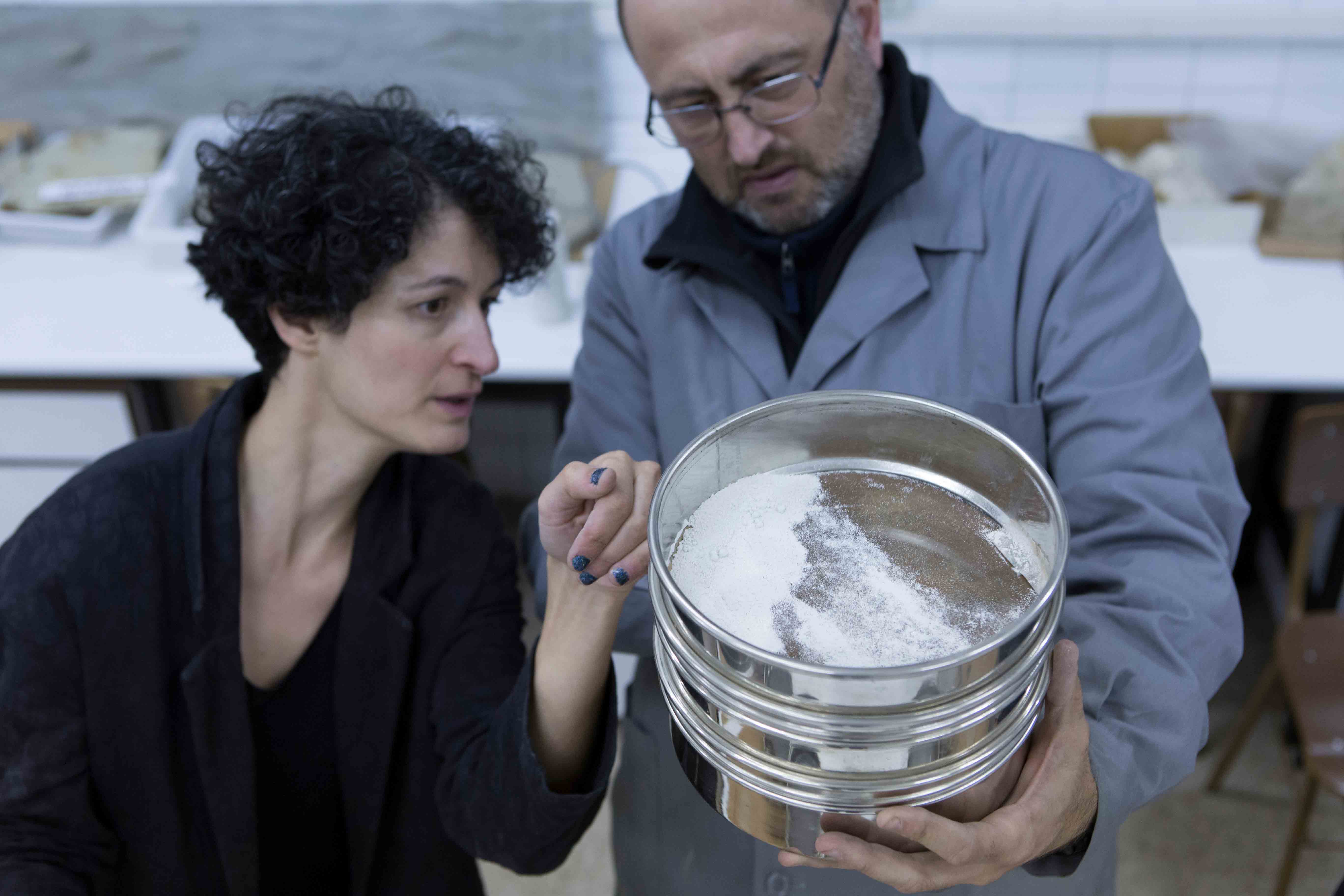
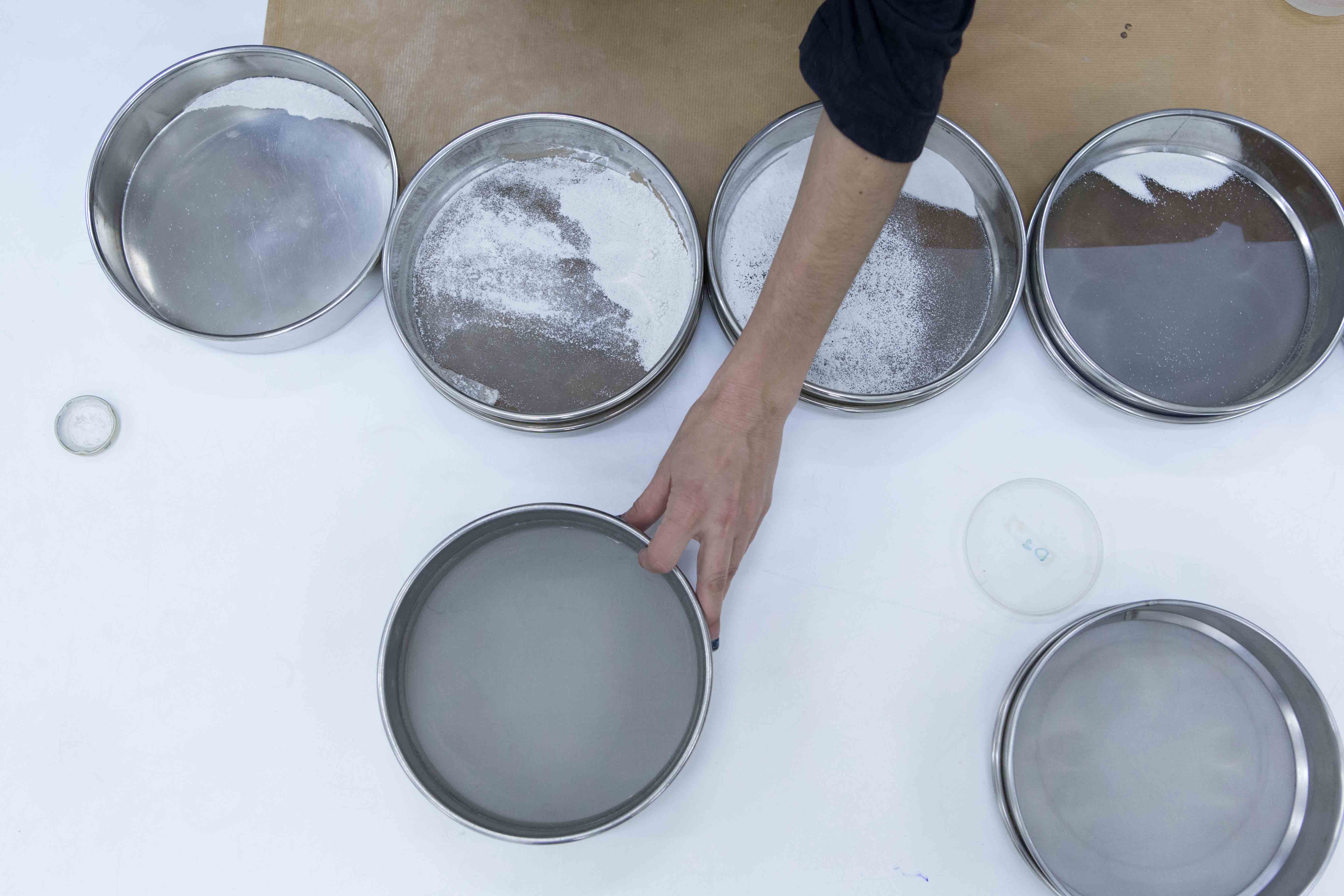
Intrigued by the lost and undocumented powder, I also started to enquire about ‘the nature of the powder’ its differences with dust and with micro-particles. I even carried out an electromagnetic granulometry (a grain size classification) at the Sedimentology Department of the Faculty of Geology of UAB. Sieving a sample of sand taken at the Fantiscritti quarry, helped me to understand a bit further what characterizes powder and its grains, what are its particularities and how I could work with such material.
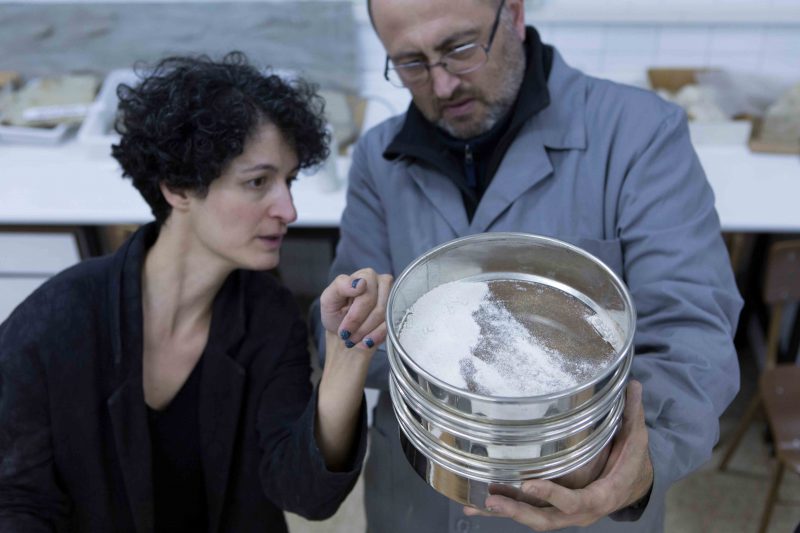
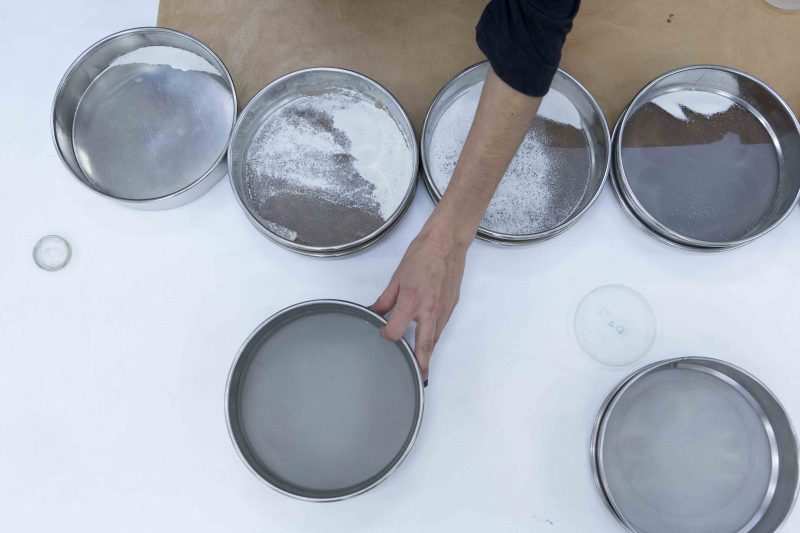
Granulometry with Dr. Oriol Oms. At the Sedimentology Laboratory in the UAB, Universitat Autònoma de Barcelona
On the other hand, at the end of 2018 I also contacted Dr. Anu Kaakinen and the researcher Katja Bohm from the Air Erosion Unit of the Geology Department of the University of Helsinki. They advised and assisted regarding the inquiries related to the marble powder, its sizes, constitution and behaviors. We also agreed on future collaborations.
Since the beginning of April 2019 I am in conversations with the curator Ulla Taipale, for a visit and possible involvement of INAR, Institute for Atmospheric and Earth System Research.
–
[1]Piero Cannata is schizophrenic and suffers episodes of delusional disorders; he is not aggressive even though he is obsessive. When I meet Piero Cannata in November 2016, I do not know that precise information. I know by then that he had been admitted to the penitentiary psychiatric institution on several occasions. I read the diagnosis in November 2018, when I access the report of the surgical specialist in psychiatry Dr. Sandro Ventura, Relazione di consulenza psichiatrica nel contenzioso promosso nei confronti di Cannata Piero. N. Di Ruolo Generale 4309/06 – N. Di Ruolo Sezione 4508/06 which is in the Fascicolo 1291/07 – Arch. N. 1230/09 of the Criminal Code File of the Superior Court of Florence.
[2]Cannata in consiglio: “Mi occupo di grammatica e nessuno mi sta a sentire” https://iltirreno.gelocal.it/prato/cronaca/2016/03/17/news/cannata-in-consiglio-mi-occupo-di-grammatica-e-nessuno-mi-sta-a-sentire-1.13143934?ref=search
[3] After a first research at the hemeroteque of the National Library of Florence [November of the 2017 and of the 2018], I verify that the majority of Italian newspapers with date 15.09.91 contain that same affirmation: “Doveva farlo, doveva farlo […] E ‘a storia di spiriti … E’ stata a beautiful signora from ’50, the beautiful Nani del Veronese, a chiederme questo. Sapete, ogni so much the vedo in sogno. “La Bella Nani is a portrait of Veronese of a Venetian lady, painted around 1560, which today is in the Louvre Museum. https://en.wikipedia.org/wiki/La_Bella_Nani
[4] I am referring to the studies Controlli analytical chimico -fisico sui frammenti di marmo provenienti dal dito del piede sinistro coordinated by Donato Attanasio (1991) and Caratterizzazione mineralogico petrografia e fisica del marmo by Fabio Fratini (1991) which were later compiled in the book Exploring David. Diagnostic Tests and State of Conservation. Prato: Giunti Editore, 2004. Pgs. 130-135
[5]To dys-pose things would be a way to understand them dialectically, to disorganize their disposition or order of appearance. The ancient Greek verb dialegestai means to controvert, to introduce a difference (dia) in the discourse (logos). DIDI-HUBERMAN, Georges. When The Images Take Position. Madrid: Antonio Machado Books, 2008
–
– Report Travel Grant, 2017
– Report Travel Grant, July 2018
– Report TTOR grant, 2018 -
Crederrei, se fussi di sasso presents a chrono-material and dialectical reflection on one of the most paradigmatic acts of iconoclasm of the Twentieth Century: the hammer blow that Piero Cannata gave to the second toe of the left foot of the David (1501-1504), the renowned sculptural masterpiece by Michelangelo Buonarroti.
Resulting from five years of thorough study of all the implications surrounding the accident, Crederrei, se fussi di sasso offers a reading of all the events directly or indirectly linked to the iconoclast act. Using an anachronistic or non-lineal approach, this project, thus, presents a multifaceted understanding of Cannata’s gesture, a sound reconstruction of the event encompassing all the voices involved.
The proposal draws from the reception theory in the field of art and from the studies on iconoclasm in particular, adopting a new materialist perspective taking into account the qualities of the masterpiece. This specific approach relies on significant scientific information, which was obtained after the chemical and petrographic analysis of two of the fragments detached from the sculpture.
Crederrei, se fussi di sasso, the exhibition phase of the research project Martellata_14.09.91, consists of five sculptural outputs, two crystallographies and two video essays. The artist carried out the production of the works during a residence at the Royal Academy of Spain in Rome (March-November 2022). The project is accompanied by the publication Martellata, edited by Mousse Publishing during 2024.
Throughout the development of the project, the artist counted with the collaboration of the following institutions: CNR – Consiglio Nazionale delle Ricerche, Fondazione Casa Buonarroti, Galleria dell’Accademia, Gipsoteca dell’Istituto d’Arte di Firenze, Opificio delle Pietre Dure e Laboratori di Restauro, and Palazzo di Giustizia di Firenze (all of them in Florence); Dryphoto Arte Contemporanea (Prato); Arte Rosa Restauro (Milan); Musei Vaticani – Laboratorio Restauro Marmi e Calchi (Vatican City); the Stanford University – Computer Science, The Digital Michelangelo Project, Archive of 3D Models (San Francisco, United States); TorArt, the Cava and Laboratorio di Arte Michelangelo, and the Museo Cava Fantiscritti (Carrara, Italy); the University of Helsinki – Department of Geosciences and Geography Subunit (Helsinki); the Faculty of Geology of the Universitat Autònoma de Bellaterra (Barcelona, Spain).
The project is mainly supported by: AECID, Royal Academy of Spain in Rome, Kone Foundation, Suomen Kultturi Rahasto, Taike, Publics, Uniarts Helsinki and Villa Romana.
Crederrei, se fussi di sasso is a component of the doctoral thesis Behaving Unconventionally in Gallery Settings, which experiments with instigating occasions for misrepresented (human and non-human) behaviours that, within the conceptual (virtual and non-virtual) architecture of display, could be considered non-conventional and traditionally unacceptable.
-
The six formalizations of Martellata_14.09.91 will compose an essayistic exhibition. They will be the following:
1. A Computerised Act of Vandalism
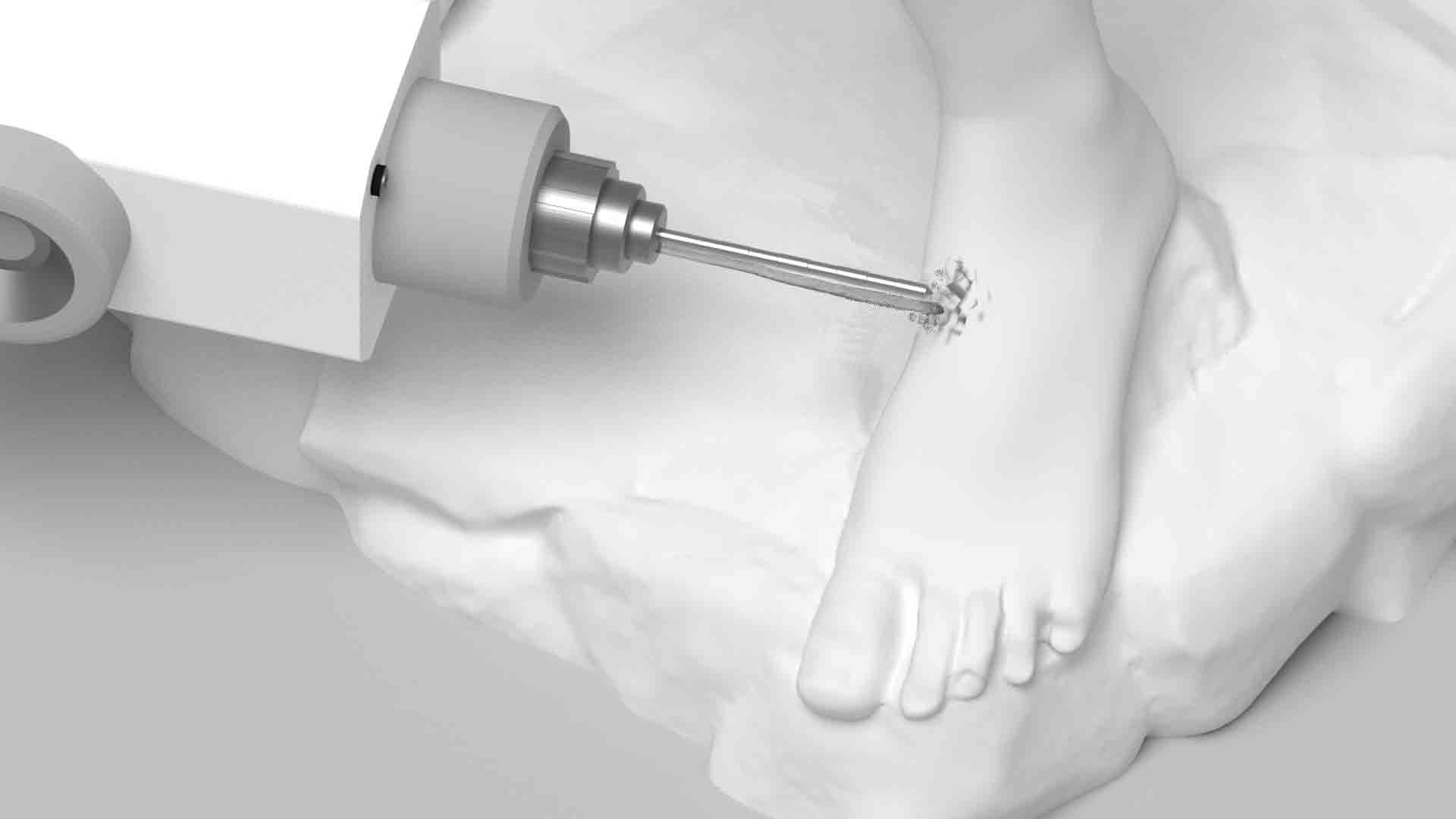
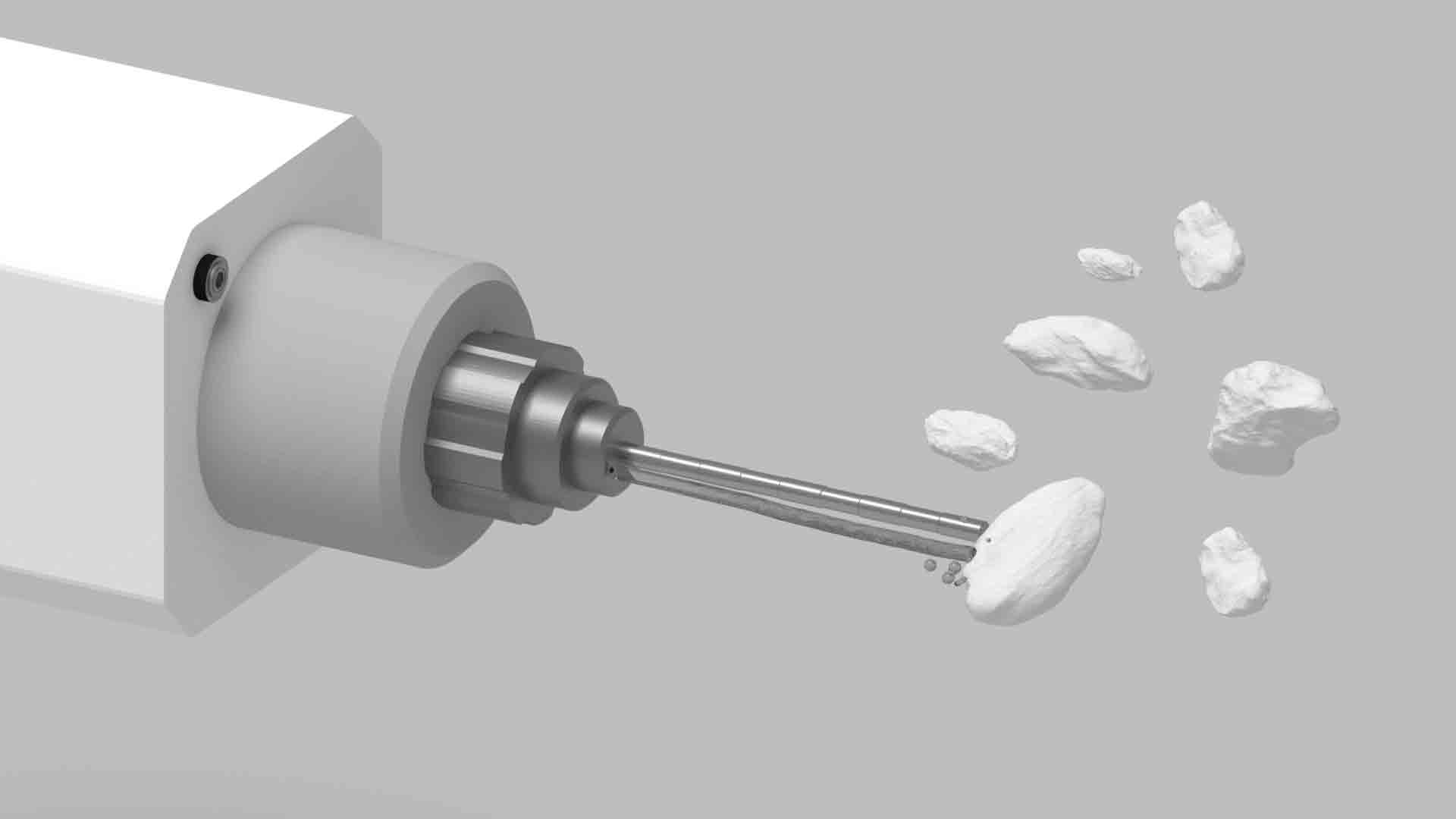
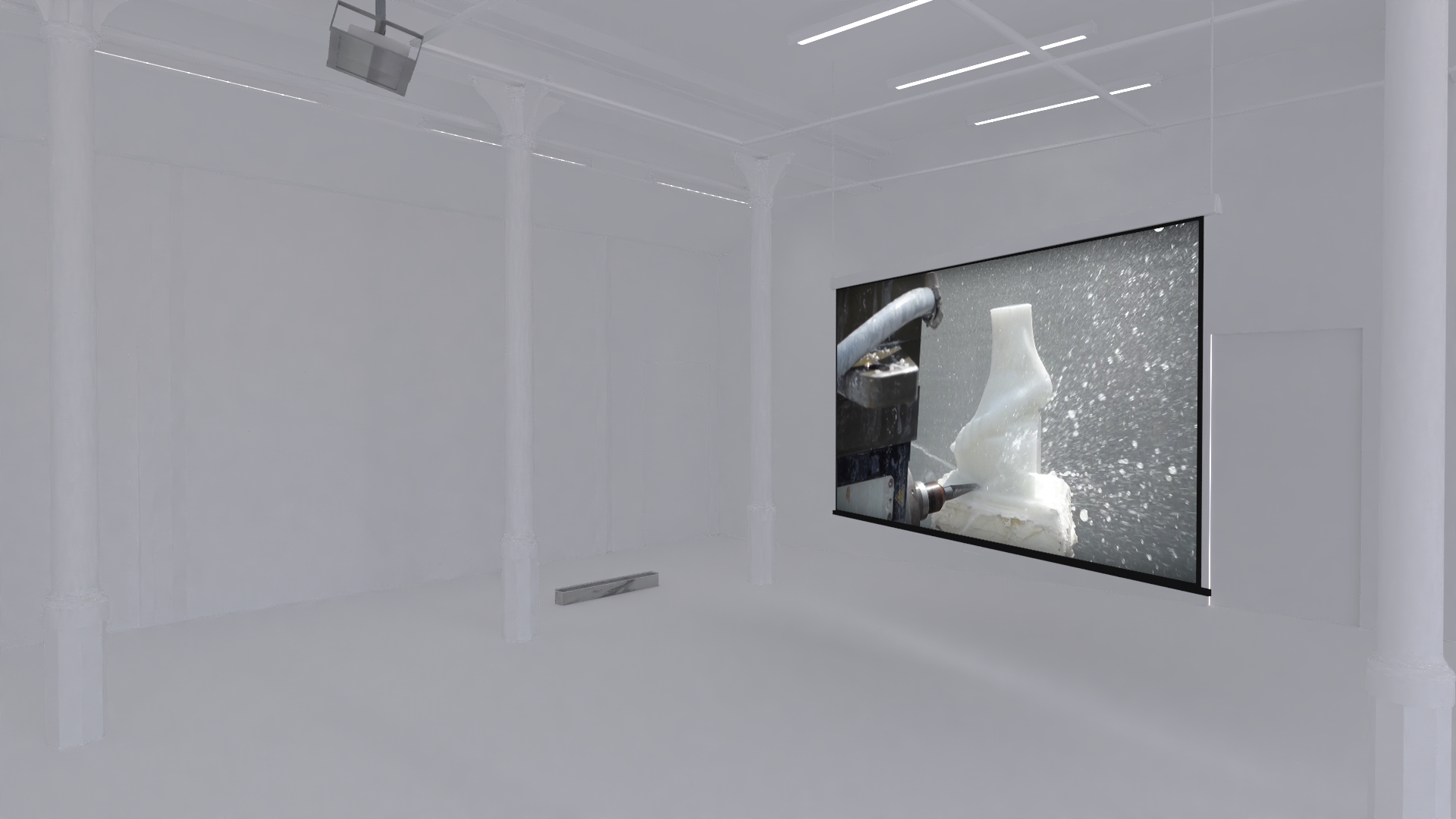
A robot-mill (a robotic arm) will carve out (and reproduce) the seven fragments detached from the toe; out of a copy of David‘s foot previously sculpted in marble. This will be made by TorArt and it will happen in Carrara, in the Fantiscritti quarry, the area of origin of the David’s marble block. TorArt is the only workshop that has currently made a 1:1 copy of the David as well as a reproduction of the bombarded Palmyra Triumphal Arch.The automatised carving will be understood as a performance; and it will be documented by three cameras (two CANON 5D Mark II and a high-definition micro-camera that will be attached to the robotic arm).
This experimentation aims to approach the iconoclastic gesture and “to recover” the fragments that were subsequently attached to the sculpture. It also addresses other issues such as the application of new technologies in the processing of marble and the reconstruction of a collective memory.
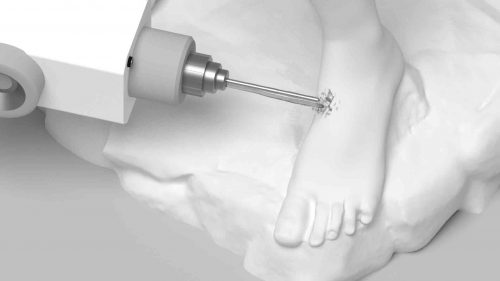
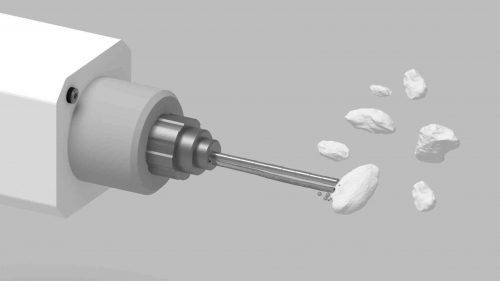
3D visualization of the computerized carving processThe final result of A Computerised Act of Vandalism will be seven sculpted fragments and a video of the robotic milling. Contrary to what happened with the dust released from the David after the hammering, the powder resulting from the activity of the diamond-core drill will be collected for the output Re-re-copy.
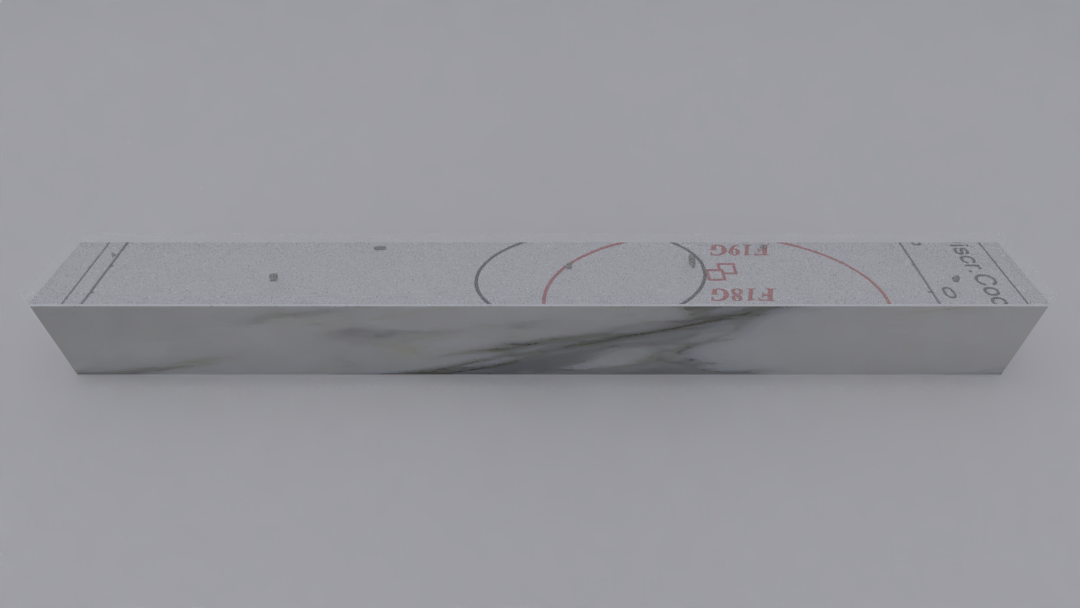
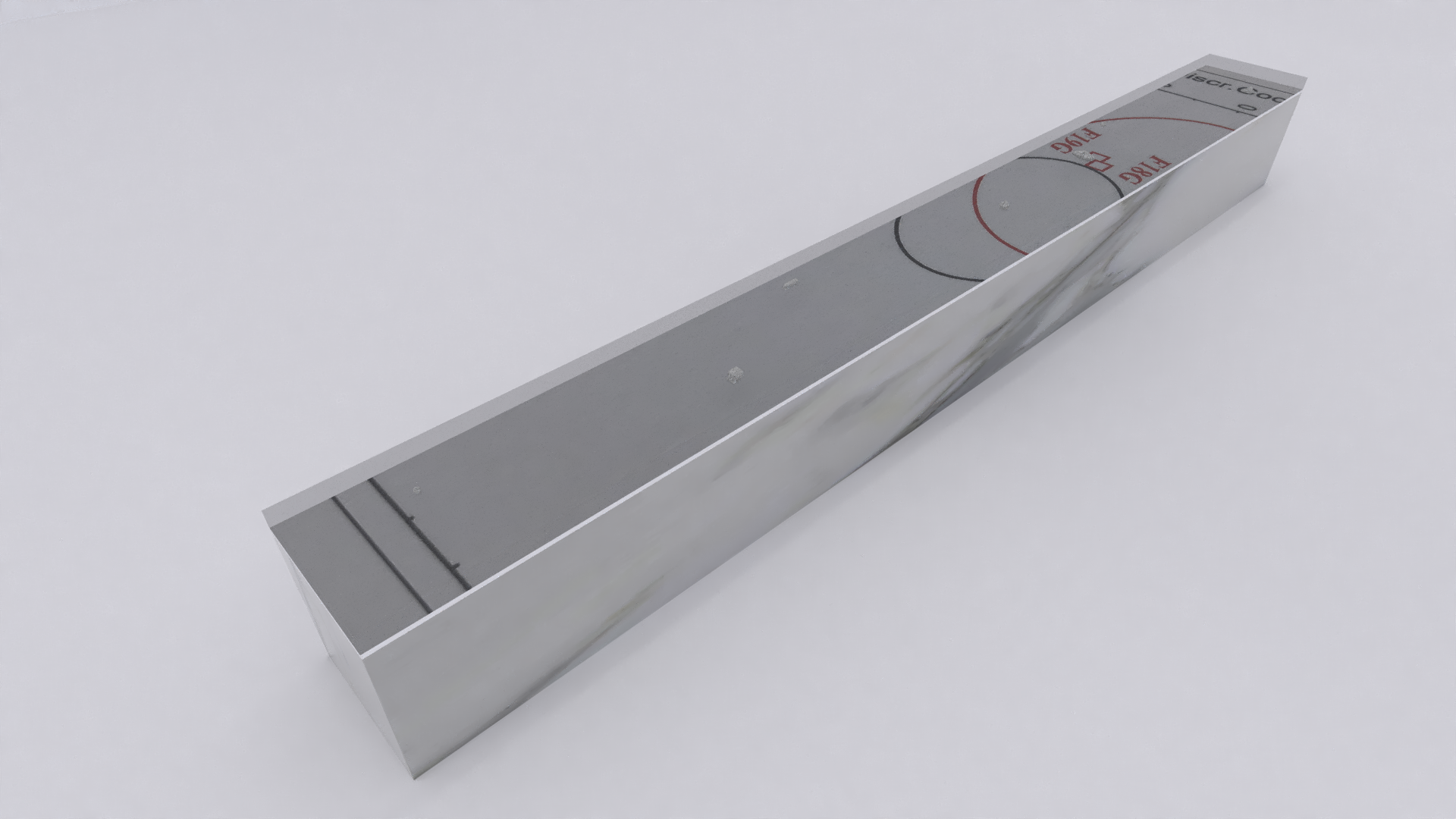
In the exhibition, the video documentation will be projected on a screen about 3m long. On the ground, a Fantiscritti marble base will support the seven robotically sculpted fragments. Under these and between an antireflection glass and the marble, a photographic detail of the comparative crystallographic study will show the location of extraction of the David‘s marble block.
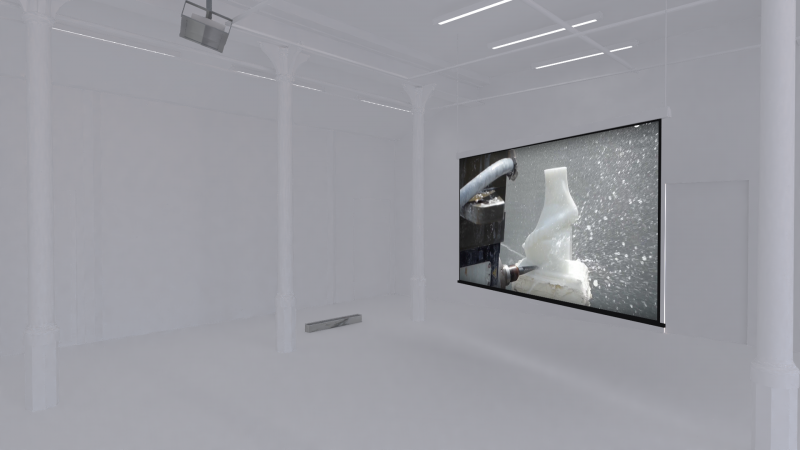
General view of A Computerised Act of Vandalism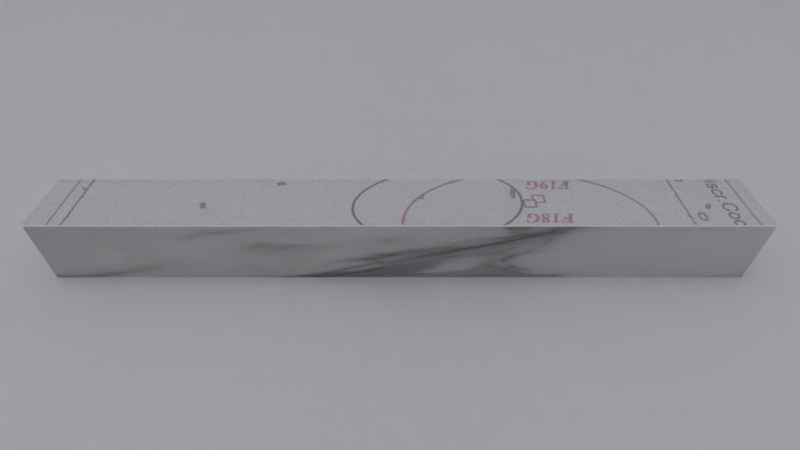
A Computerised Act of Vandalism. Top view of the seven sculpted fragments, resting on the composed base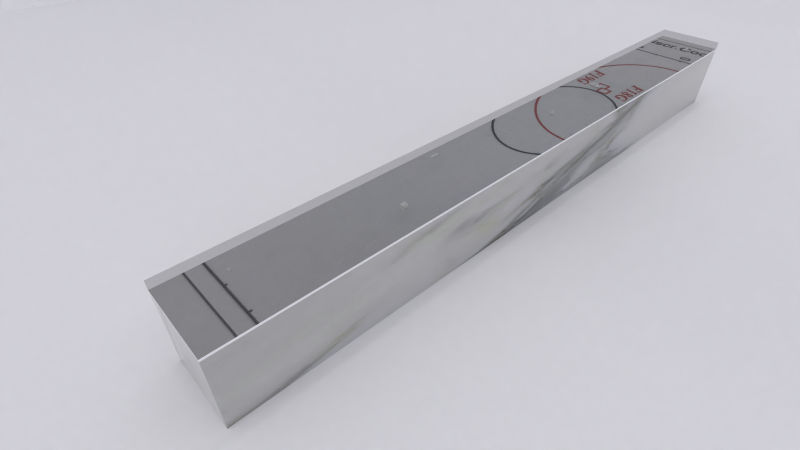
A Computerised Act of Vandalism. Side view of the seven sculpted fragments, resting on the composed base2. Re-re-copy
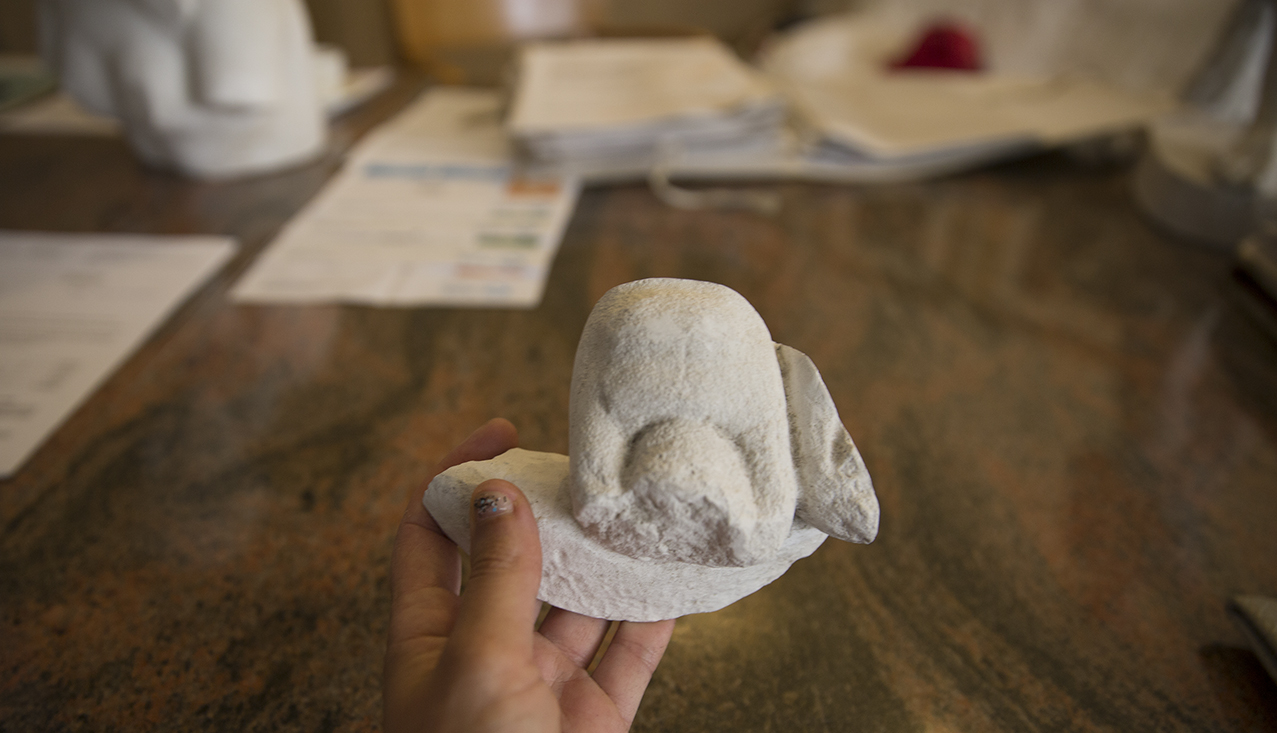
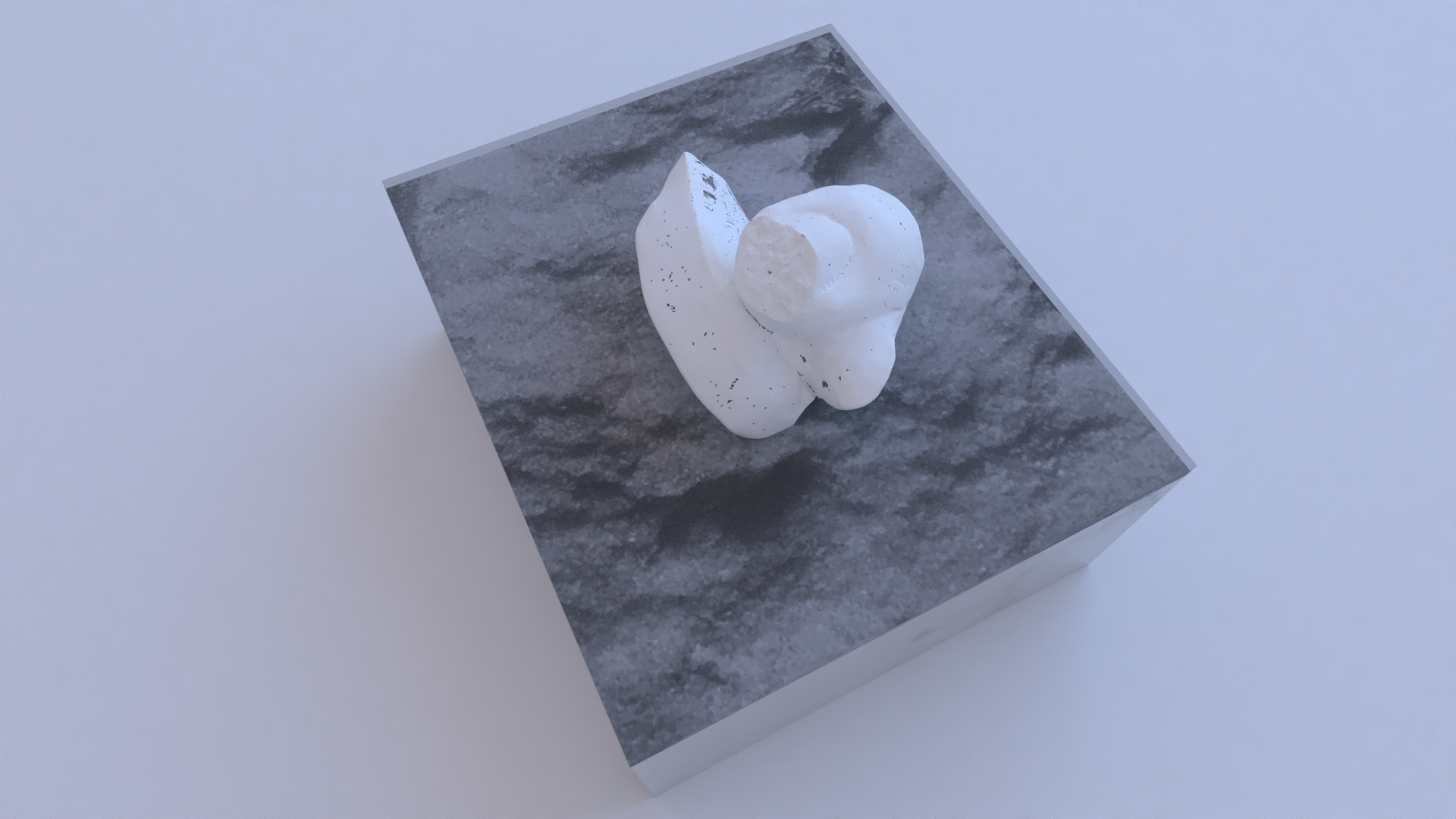
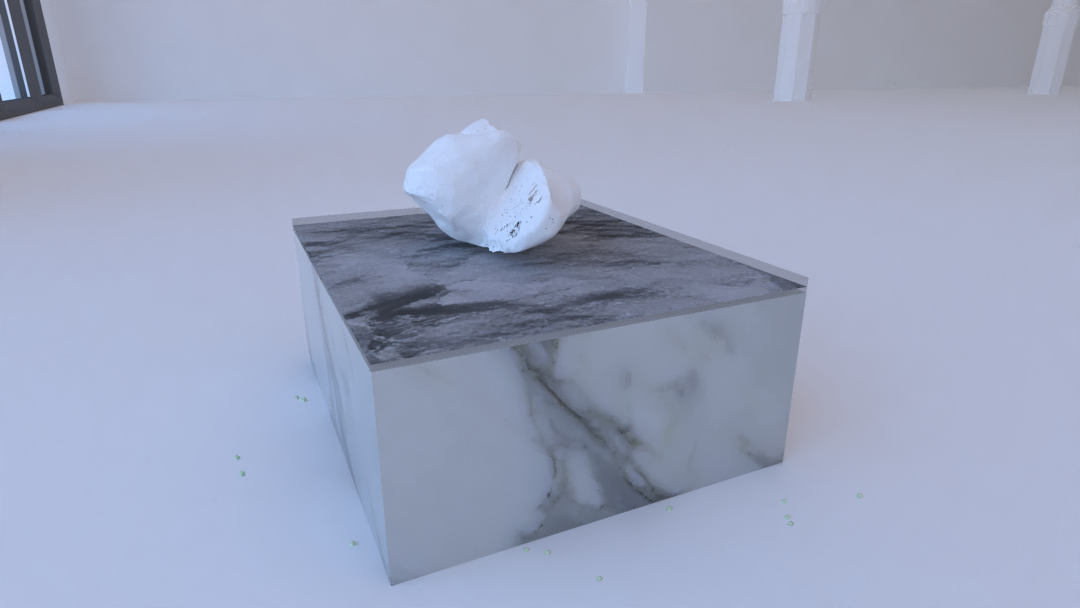
Part of the marble powder collected during the computerised carving will be used for making a reproduction of the reproduction of the broken toe. The reference will be one “original plaster copy” that Luigi Davitti -technician of the Gipsoteca dell’Istituto d’Arte di Firenze -made after the iconoclast act. The plaster copies were used by different restaurateurs in 1991 and in 2003 for the study of the relocation of the pieces detached from the sculpture.For Re-re-copy I will require the punctual collaboration of Luigi Davitti, the Opificio delle Petre Dure e Laboratori di Restauro (OPD), the Consiglio Nazionale delle Ricerche in Florence (CNR-Firenze), and producers Radio Papesse.
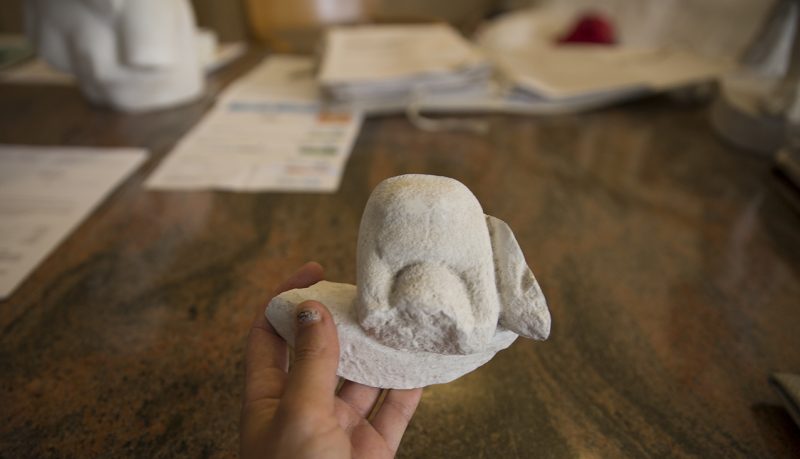
Plaster reproduction of the fractured toe. Photograph taken at the studio of the restorer Cinzia Parnigoni, July 2018
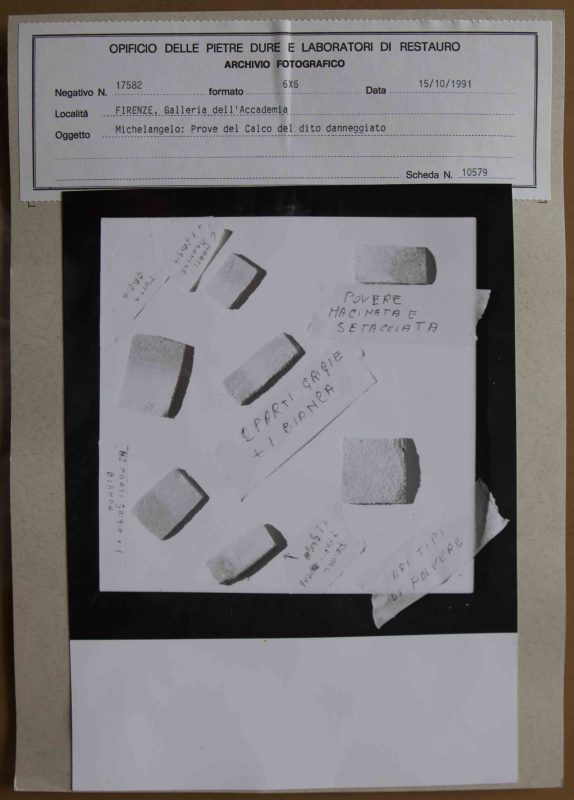
Image of various gluing tests. Photographic archive of the Opificio delle Pietre Dure e Laboratori di Restauro. File n. 10579In order to agglutinate the marble powder in the form of the fragmented toe, I will apply Akeogard Co (Syremont) and Primal AC 33. These are the adhesive components that Annamaria Giusiti and Roberto Nesti (Restorers from the Opificio delle Petre Dure e Laboratori di Restauro) used to reconstruct the toe in October 1991.
The intention of this experimentation is to recreate the processes of cast, copy, study and reconstruction of the damaged toe from the reverse. By applying the restorer’s adhesive material to the marble powder, there is the aim of approaching the possibilities of the glue, while at the same, of learning about the different shapes and alterations of the rock
In the gallery, Re-re-copy will be presented as follows:
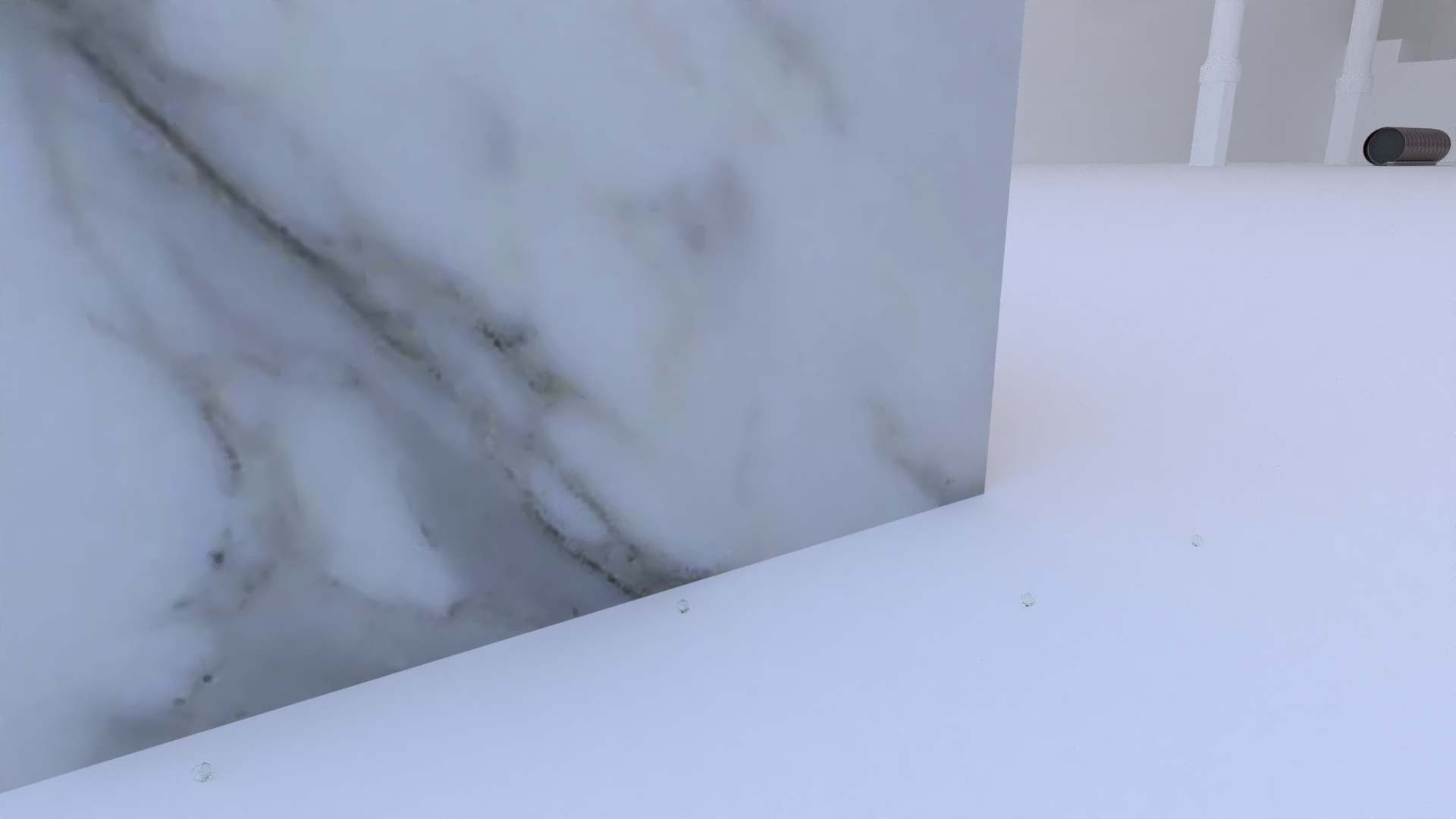
A flat screen mounted on a strut will show the petrographic study of the thin section of the fragment F17G; as an illuminated still photo, simulating the result of the microscopic analysis on the monitor of the CNR-Firenze laboratory.The agglutinated marble dust reproducing the broken toe will rest on a base of a polished marble. This will come from Fantiscritti and will have many taròli[1]. On its top, and under the reproduction of the reproduction of the broken toe, there will lay a close-up photograph of the breakage. This document was found at the ‘Fascicoli dei relievi tecnici. Gabinetto di Polizia Scientifica of 14.09.1991′, which is classified in the file 12190/91 of the GIP section of the Superior Court of Florence.
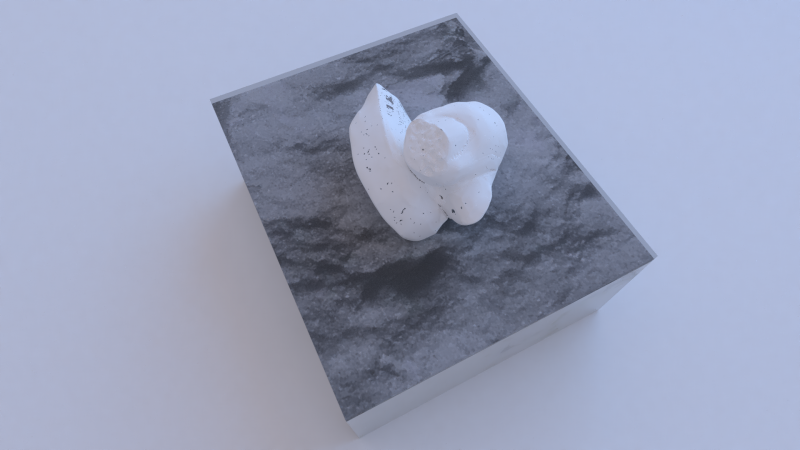
Top view of A Re-re-copy, the reproduction of the reproduction of the broken toe on the composed base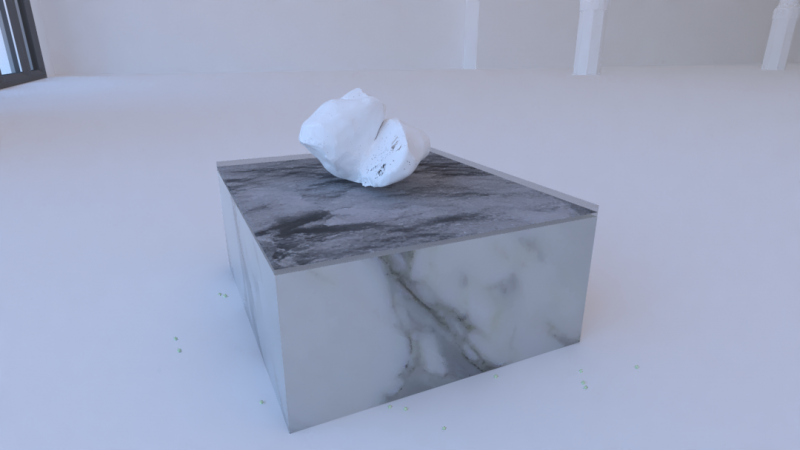
Side view of A Re-re-copy, the reproduction of the reproduction of the broken toe on the composed base3. Gaps
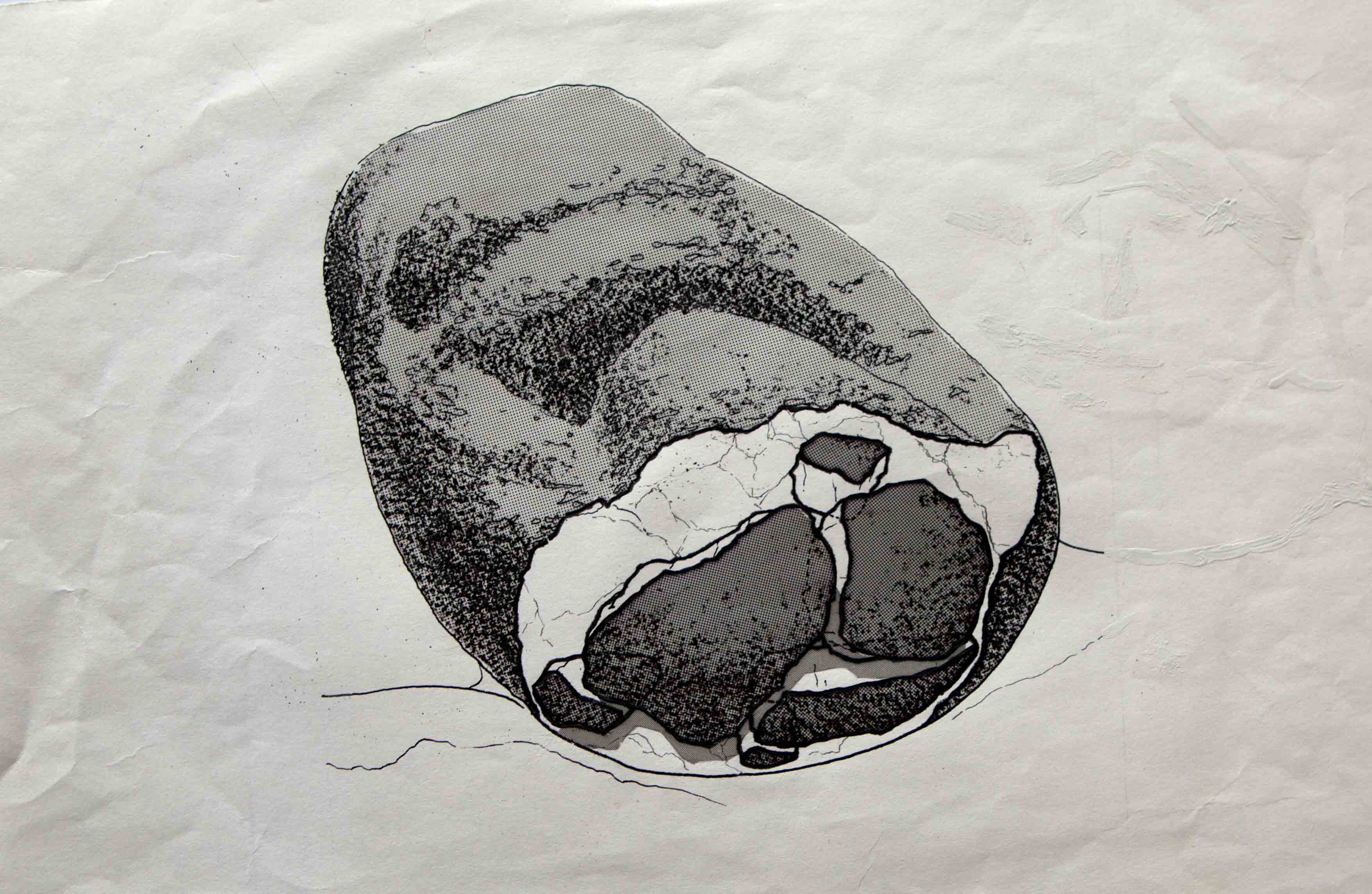
As the article ‘David’ di Michelangelo. Un restauro in punta di piedi states[2]: “for the reconstruction of the broken toe, several voids had to be filled using a good amount of mortar. The internal pieces of the sculpture that were used for chemical and crystallographic studies had to be replaced, but also the gaps of matter left by the dust that could never be collected. Marble powder was mixed with the adhesive agents Akeogard Co (Syremont) and Primal AC 33 to make mortar.”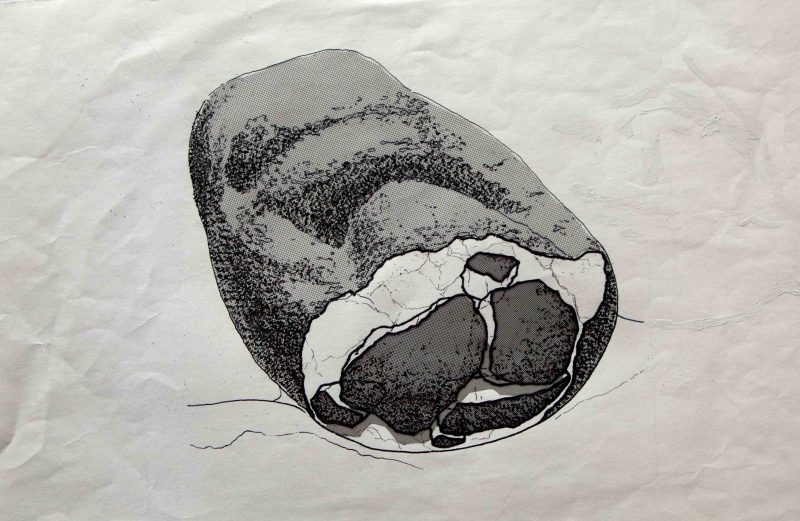
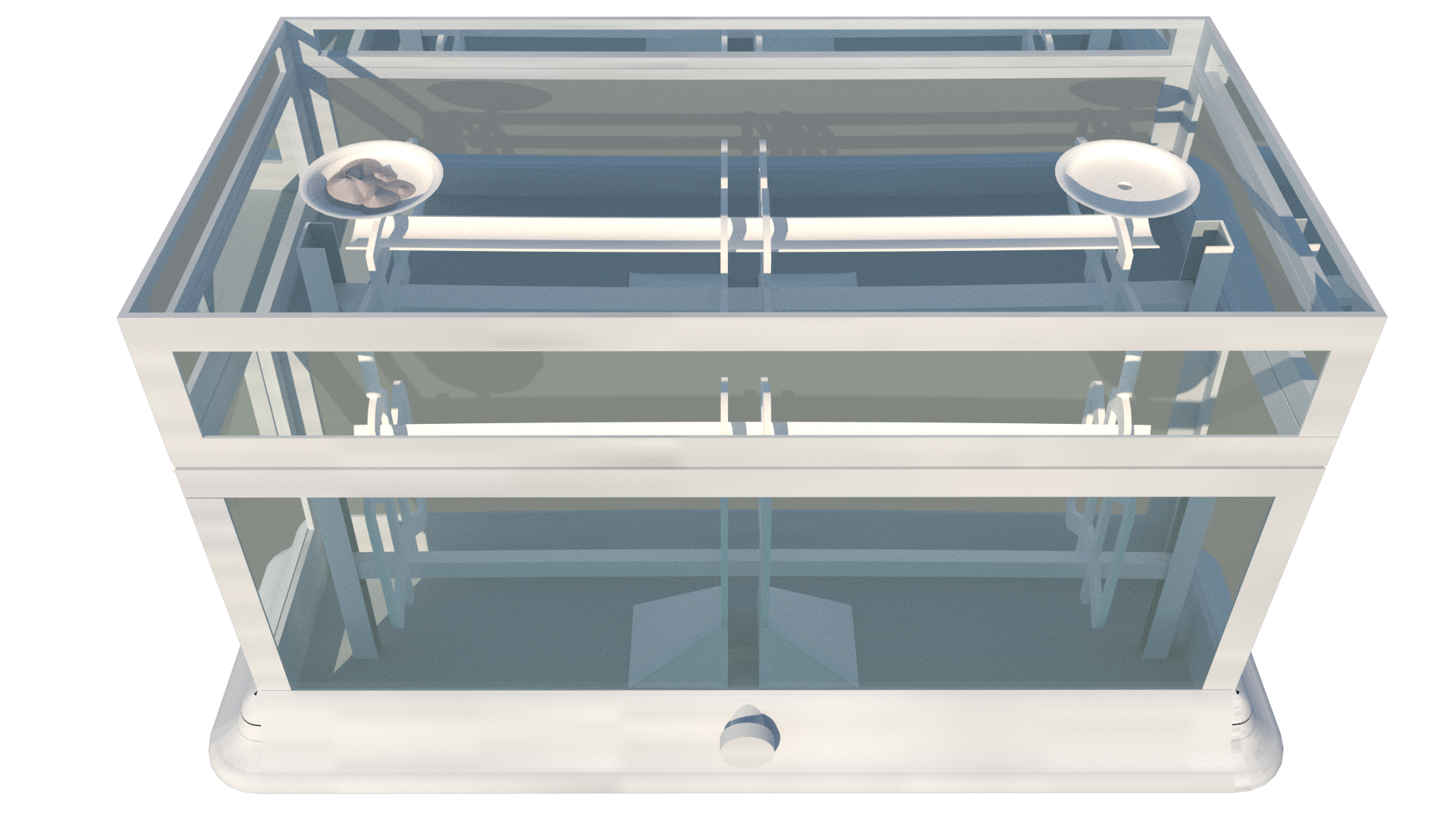
Technical drawing of the fractured toe, along with its collected fragments and the lost matter after the attack. Document added at the article ‘David’ di Michelangelo. Un restauro in punta di piedi, which original was consulted at the photographic archive of the Opificio delle Pietre Dure e Laboratori di Restauro File n. 10579Using the same mould for Re-re-copy, and employing the fragments sculpted in A Computerized act of vandalism, I will make a volumetric calculation of the amount of matter that had to be added for the reconstruction of the toe. Such amount will be deposited in the form of marble powder on one of the plates of a laboratory scale. This arrangement will display the weight of “the voids”.
This experimentation approaches aspects like the loss of matter and the access to sedimented information, the mimetic restoration and the replacement of a noble material, the chronological lags when making a reconstruction.
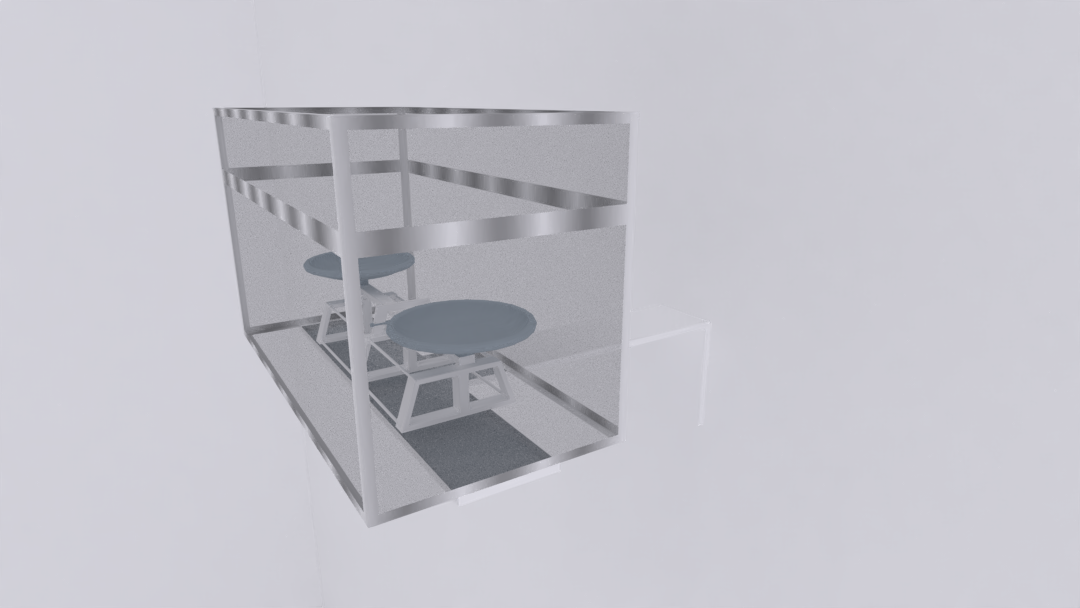
Gaps will be a laboratory scale-vitrine fixed on the wall. The calculated powder will rest on one of its plates.
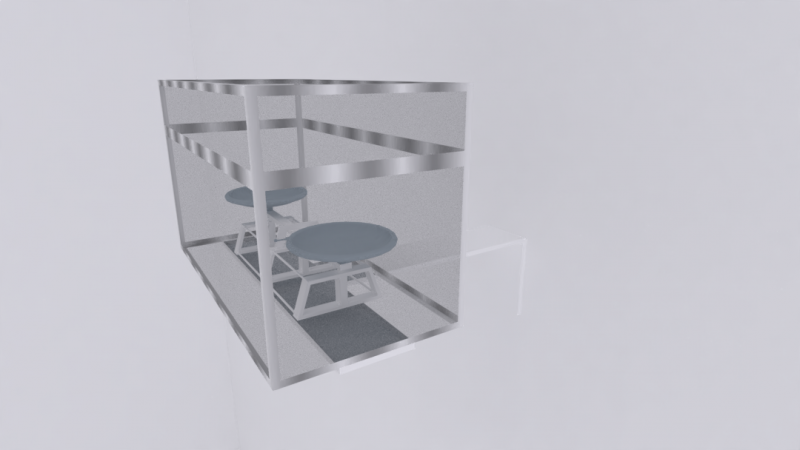
Side view of Gaps, one laboratory scale with marble powder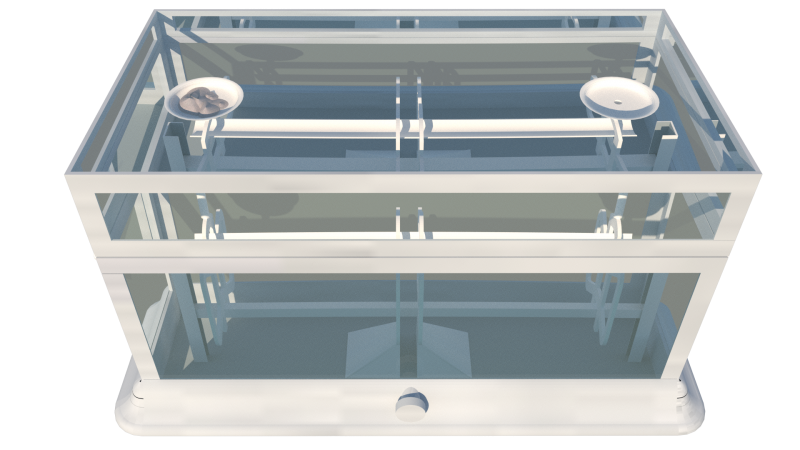
Top view of Gaps, one laboratory scale with marble powder4. Clouds of Marble Dust
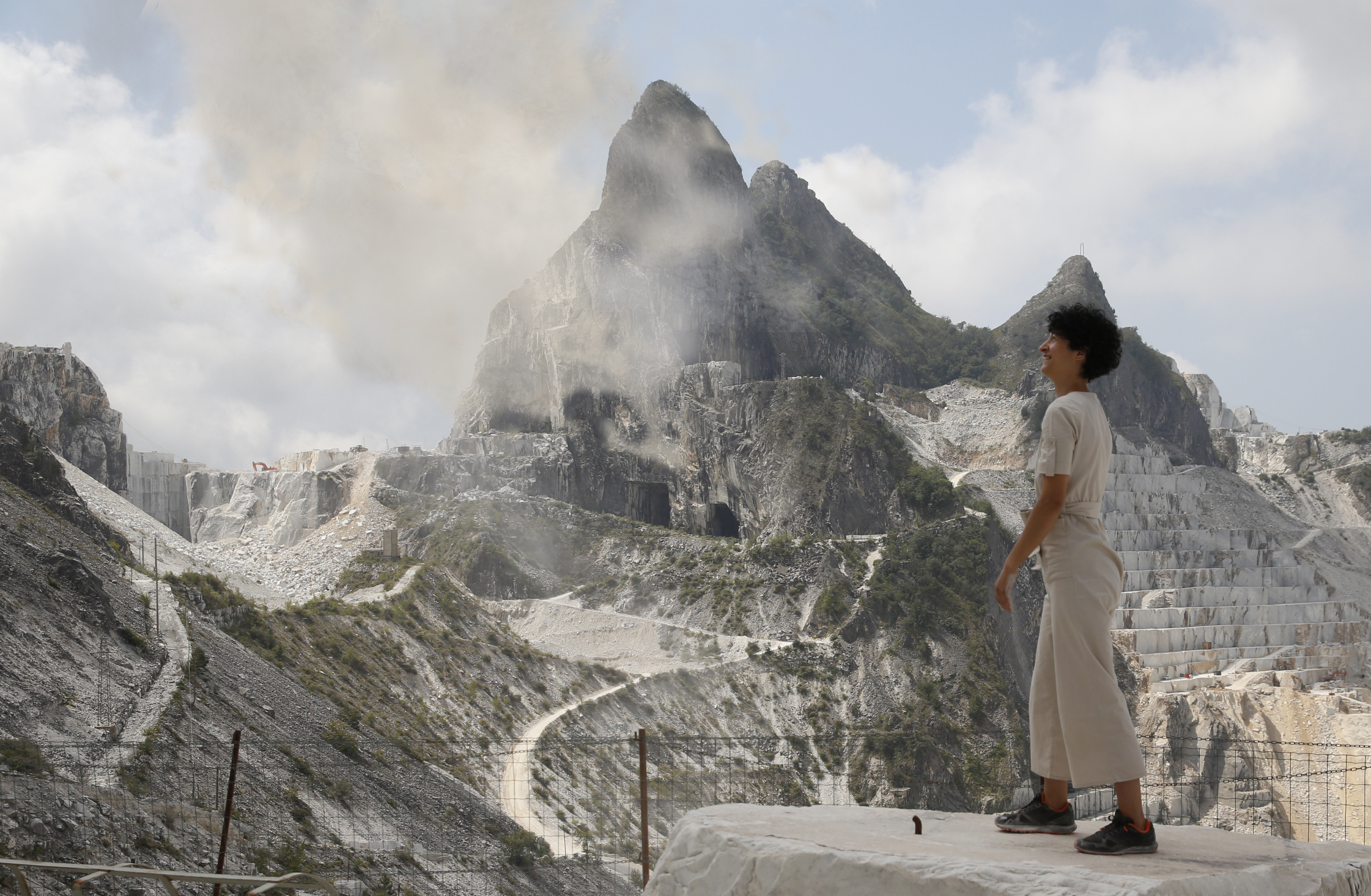
I verified with Dr. Oriol Oms of the Sedimentology Unit of the Faculty of Geology of the University Autònoma de Bellaterra, that the “lost matter” of David‘s toe was not only in the form of marble dust, but also of particles that were fired into the air. Depending on their µm, they could have been suspended in the room of the Galleria dell’Accademia, forming one or more clouds, invisible to the human eye.Interested in the nature of the grains of marble powder, and in order to understand how small the micro-grains could be, I carried out a granulometry -a grain classification- of a sample of soil from Fantiscritti. Furthermore, during the visit to the Michelangelo quarry in Carrara, I threw sand into the air to form a cloud of micro-grains of marble. That was a symbolic gesture to “inaugurate” a period of collaboration with the researcher Katja Bohm and Dr. Anu Kaakinen of the Air Erosion Unit of the Faculty of Geology of the University of Helsinki.
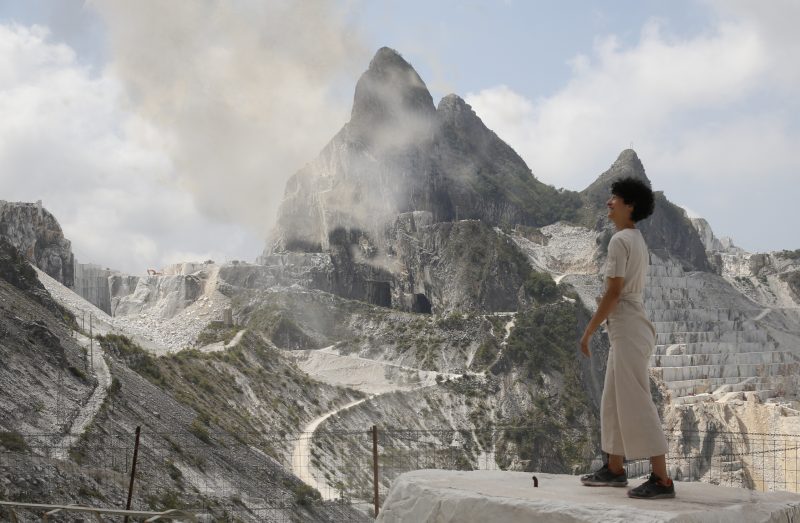
Clouds of Marble Dust. Photography taken while throwing marble dust to form a cloud. In Michelangelo quarry, Carrara, in July 2018Clouds of Marble Dust inquiries about the matter that escapes our sensory systems. It approaches non-human objects and events to challenge the assumption that form is external to matter, to representation. At the same time, there is an interest in the impossibility of accessing something like dust: the only way to study it is when it is mediated, through the a priori- assumed categories of temporality and spatiality.
In the exhibition, Clouds of Marble Dust is presented as follows:
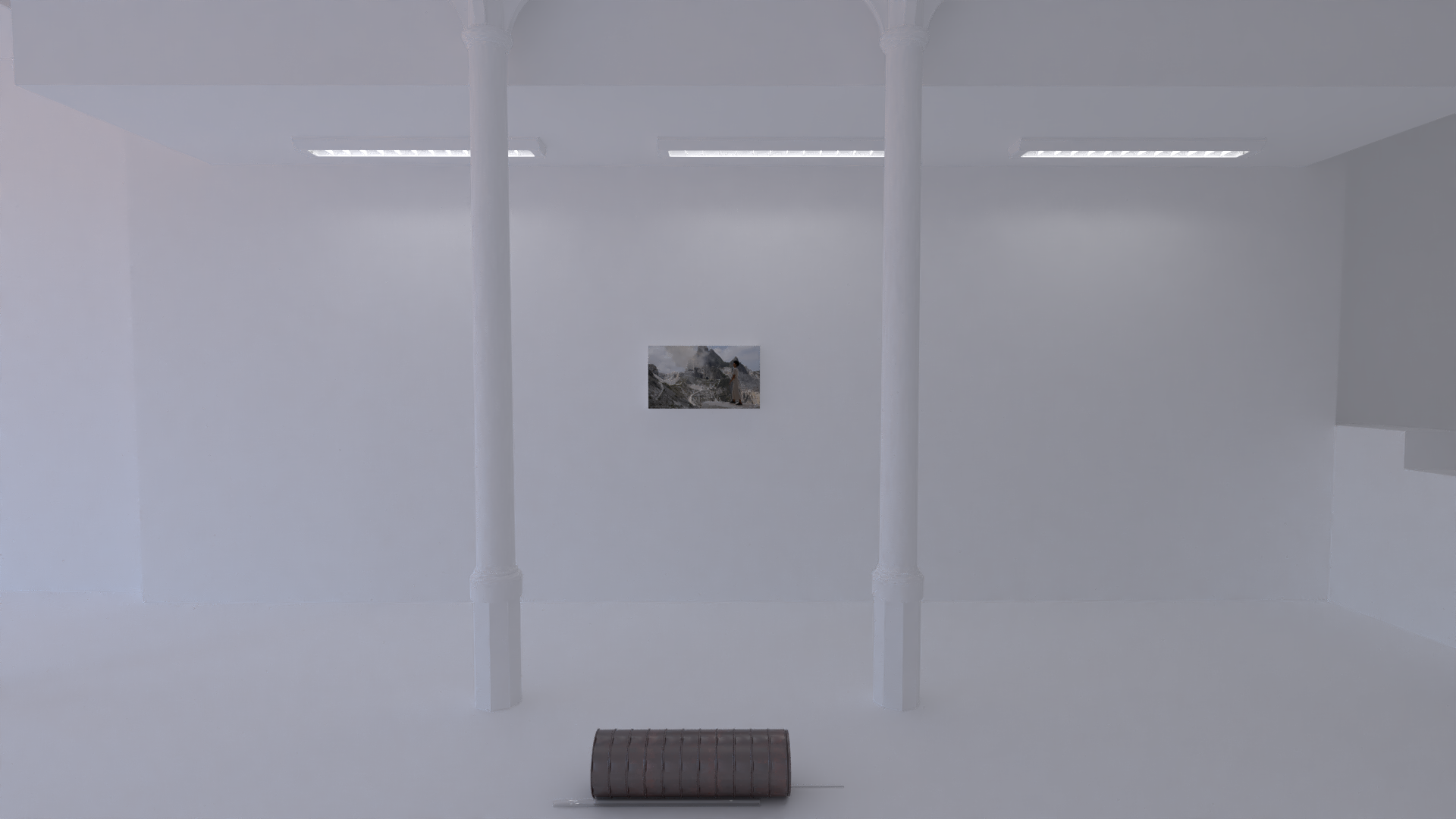
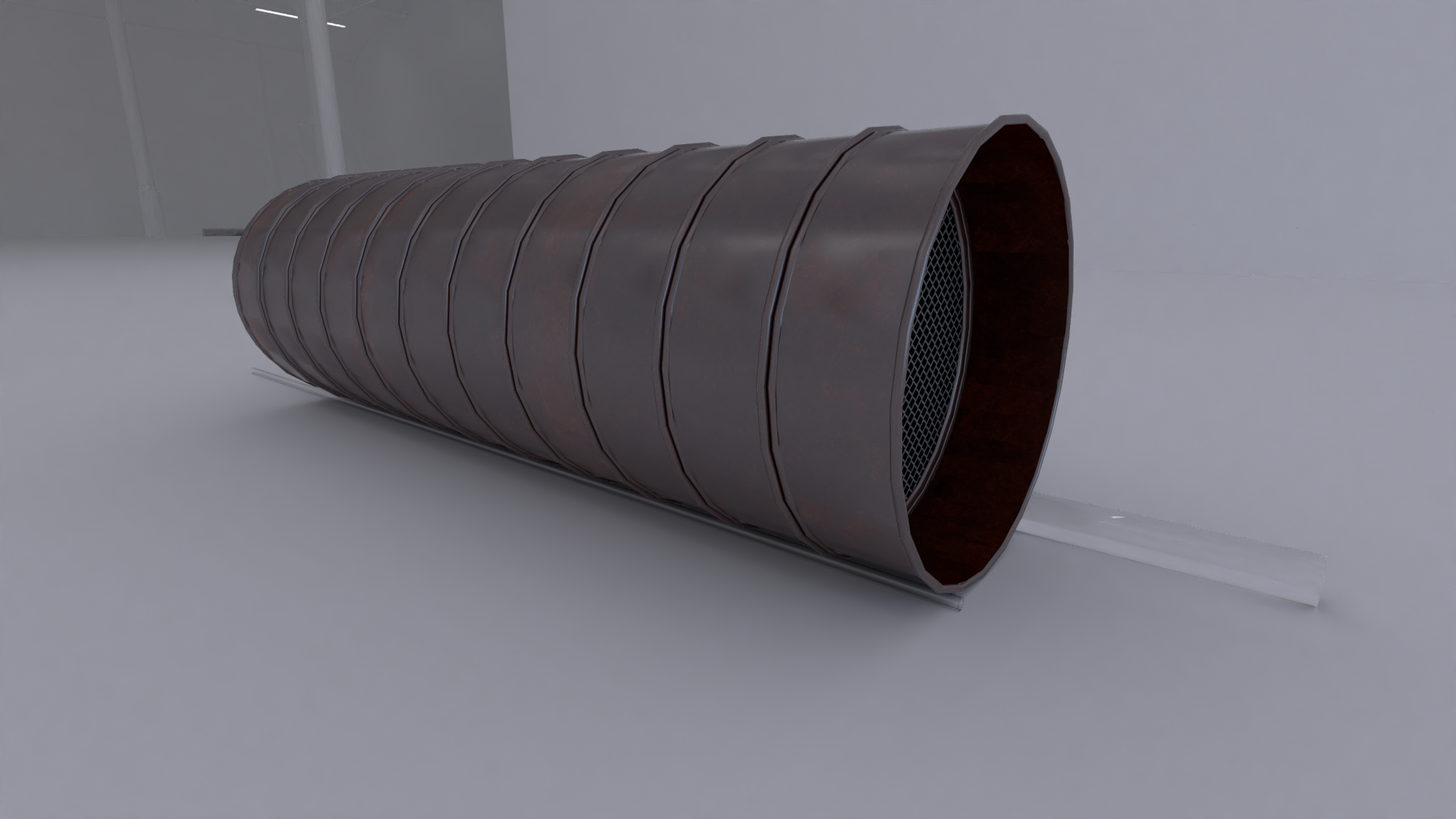
A column of sieves of different thicknesses form a column for a grain size classification. However, it rests on the floor; seated by two laboratory glass rods. On the adjoining wall, and symmetrically to the sieve column, a photograph shows the ephemeral cloud formed with earth from Michelangelo’s quarry. This picture will be replaced at the end of the show by a new cloud generated with micro-particles of marble dust that I will form (and document) using the technology of the Laboratory of the Air Erosion Unit of the University of Helsinki.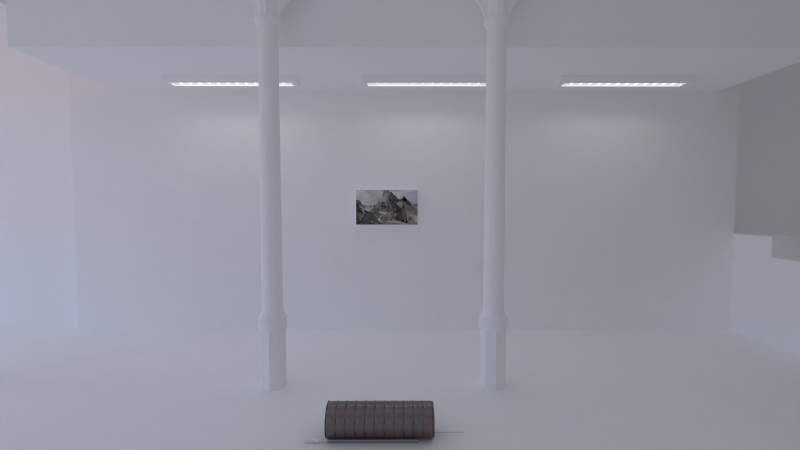
General view of Clouds of Marble Dust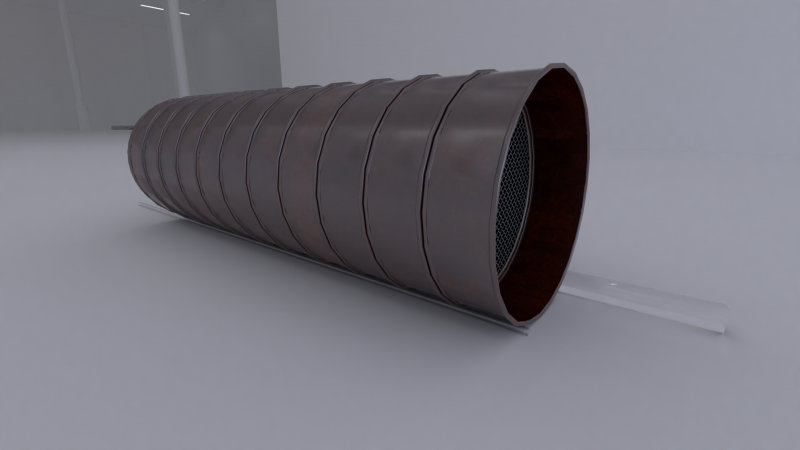
Clouds of Marble Dust. A column of sieves rests on the floor; seated by two laboratory glass rods5. Materiality Filters in Multiple Directions
According to Jussi Parikka’s article “The new materiality of dust”[3] every particle of dust carries with it a unique vision of matter: movement, collectivity, interaction, scattering… dust and particles smaller than clays and silt participate of an intensive differentiation that demands that cultural studies approach materialism with a new vocabulary, abandoning representation and deconstruction.This experimentation addresses the speculative nature of the world to display that non-human objects and events speculate even before we enter the scene. If focuses on the phenomena of collectivity, movement, non-human agency and new materialisms.
Materiality filters in multiple directions will consist of 190,000 laboratory glass spheres of 2mm diameter. These will be deposited on the ground so that they will move around the room with the steps of the visitors but also according to their own agency and conformation, forming temporary clusters.
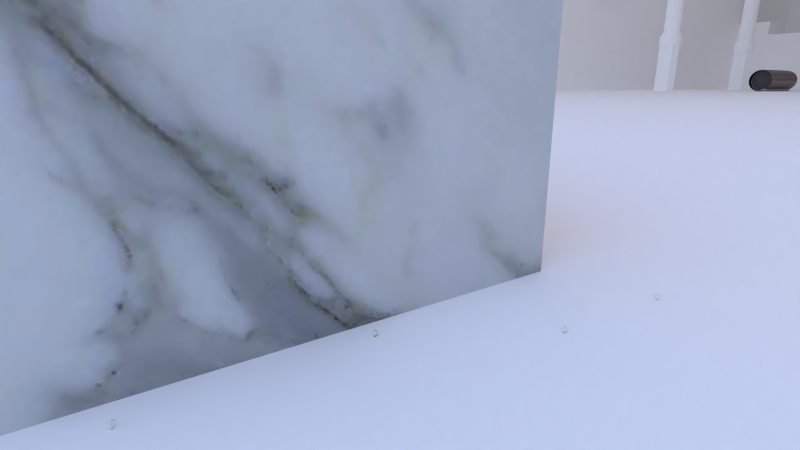
Detail of Materiality filters in multiple directions next to A Re-re-copy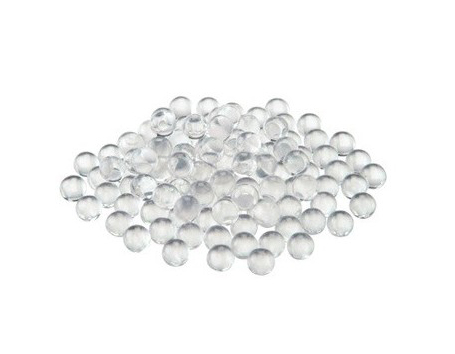
Detail of Materiality filters in multiple directions next to A Re-re-copy
6. A Photographic Series
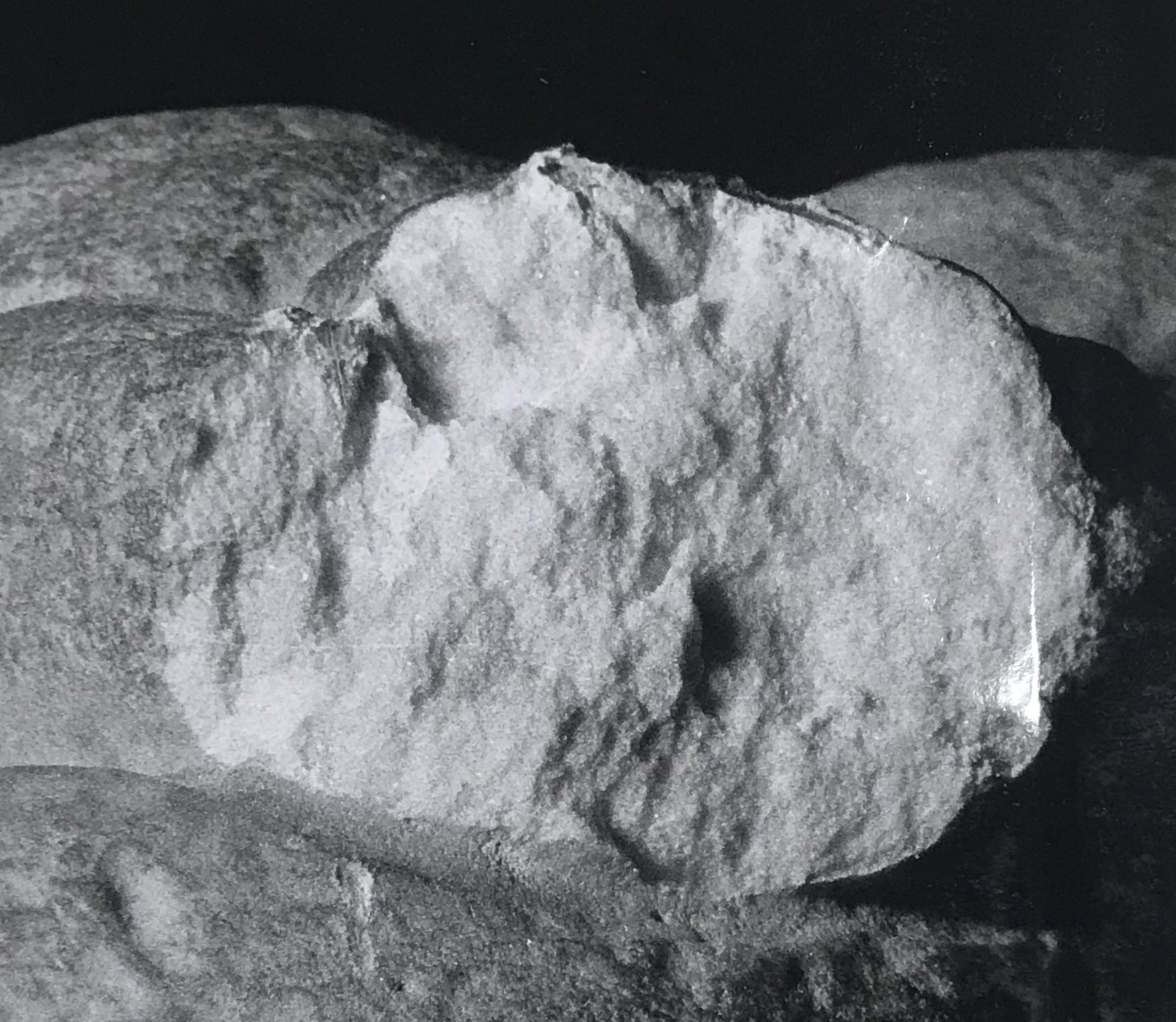
The entire work process of Martellata_14.09.91 will be documented using an analogue photo-camera loaded with a film, which 50 ISO will produce a granular (and stony) effect. As a mechanism of reflection on the intentions of the project, an exhaustive selection of only 10 images will form the photographic series; which will be later used for an exposition at the Research Catalogue.
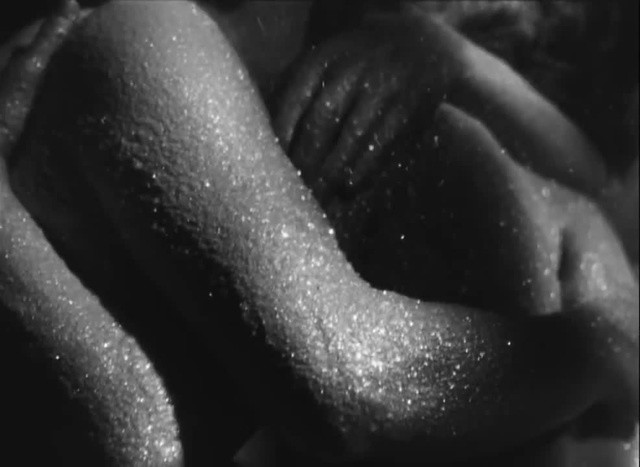
Still from the film ‘Hiroshima Mon Amour’ by Alain Resnais, 1959. The texture applied on the opening of the movie is an eesthetic reference for A Photographic SeriesThe intention of A Photographic Series is to discuss the final selection of the photographs with Piero Cannata; as his legal tutor affirms that it is possible to collaborate with him. It is almost certain that such collaboration will also mean listening for a long time his new Italian grammar[4], but the main aim is to generate a method of applied participation. The objective is to include Cannata’s aesthetic criterion in the final output of the project, while engaging him in a conversation about his iconoclast act that will review it through the images instead of asking him directly.
The display of the series will be determined by the typology and content of the photographs, but in the budget it is assumed that the selection will be of a maximum of 10 photographs and that they will be framed.
–[1] The taròli are small cavities of approximately one millimeter in size that are distributed irregularly throughout the David‘s marble surface. The local stonecutters call them “taròli” and “tarme” in their own dialect.
[2] “‘David’ di Michelangelo. Un restauro in punta di piedi” de Annamaria Giusti y Roberto Nesti fue publicado en OPD Restauro. Rivista dell’Opificio delle Pietre Dure e Laboratori di Restauro di Firenze, nº 4, 1992. The translation is mine.
[3] Parikka, J. (2012). New materialism of dust. 12. 83-88. 10.7238/artnodes.v0i12.1716.
[4] Cannata has been creating an Italian Grammar since years. A copy of such particular project was found at the Penal Archive of the Superior Court of Florence, at the file number 1230/09. But every time we have met, we have discussed about Art. Therefore, a conversation about what photographs to include in the final series will be very fruitful in terms of engaging Cannata.