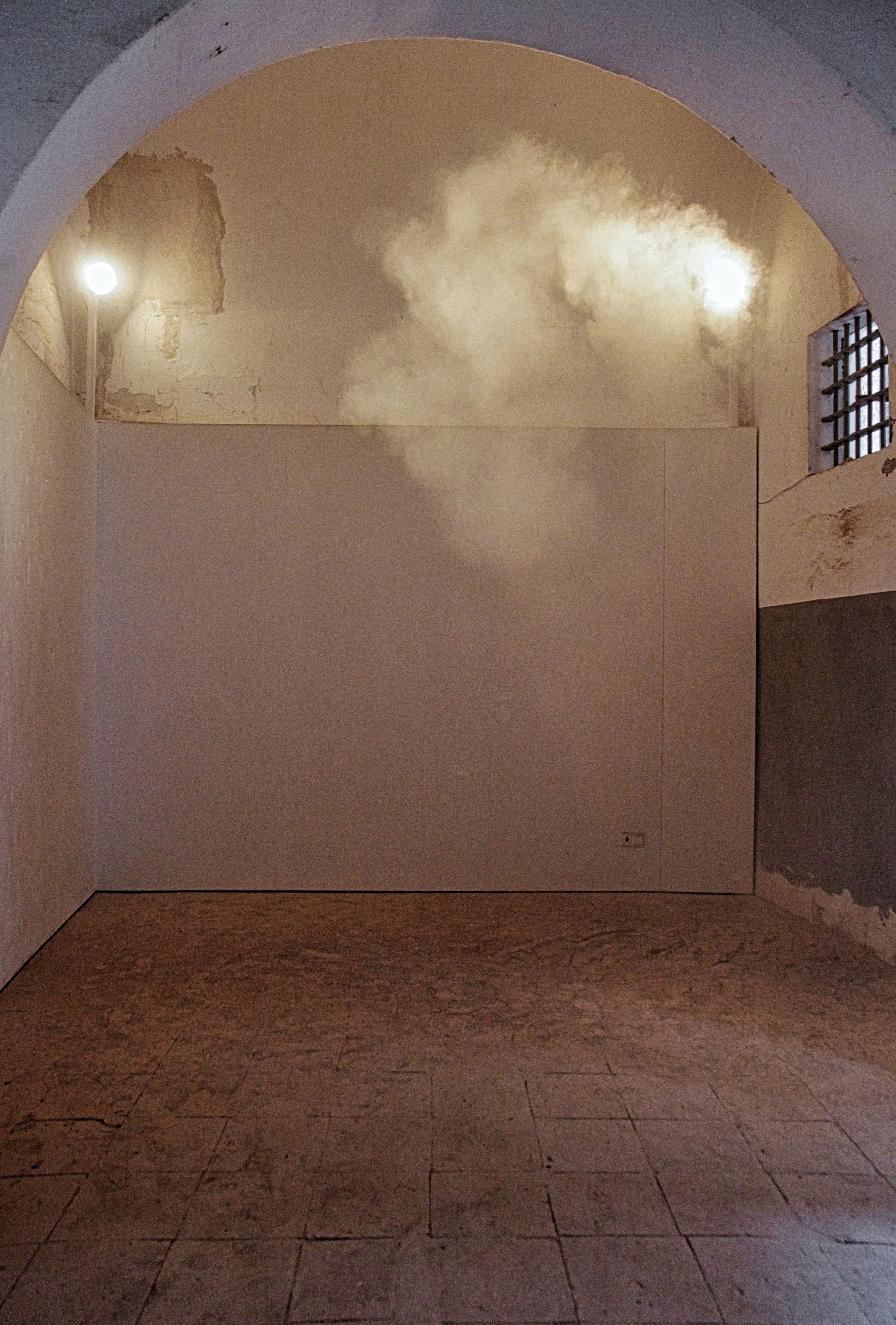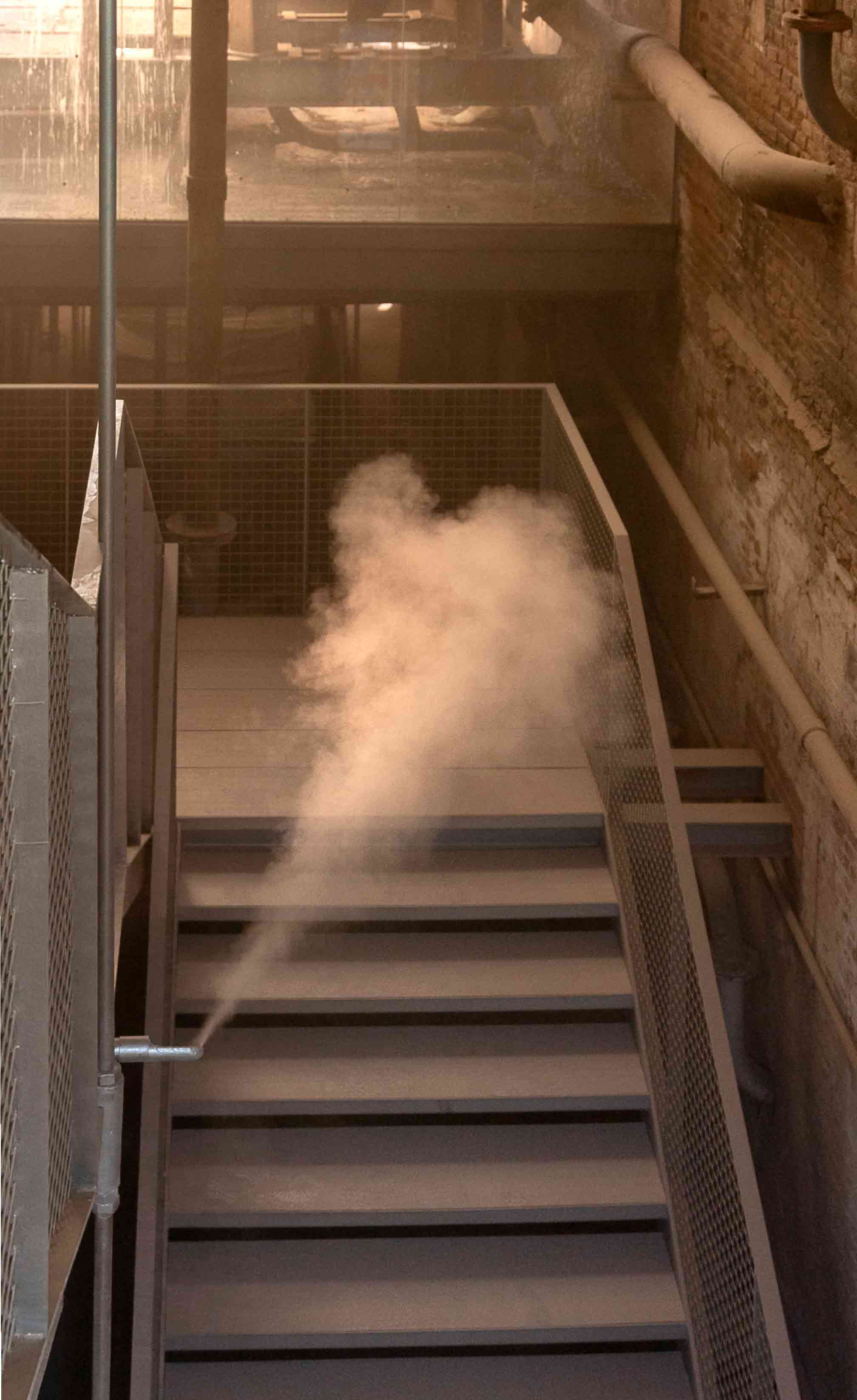
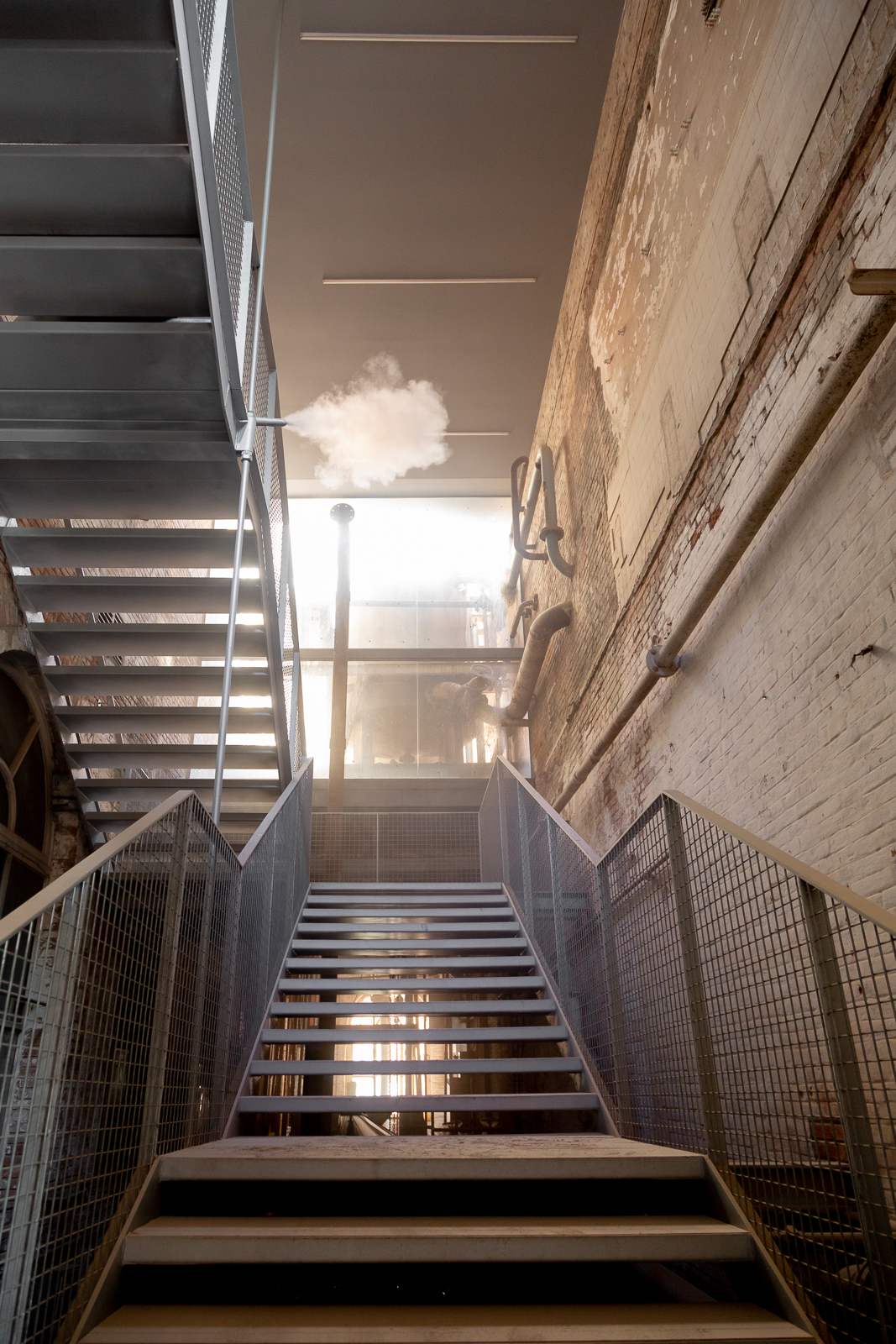
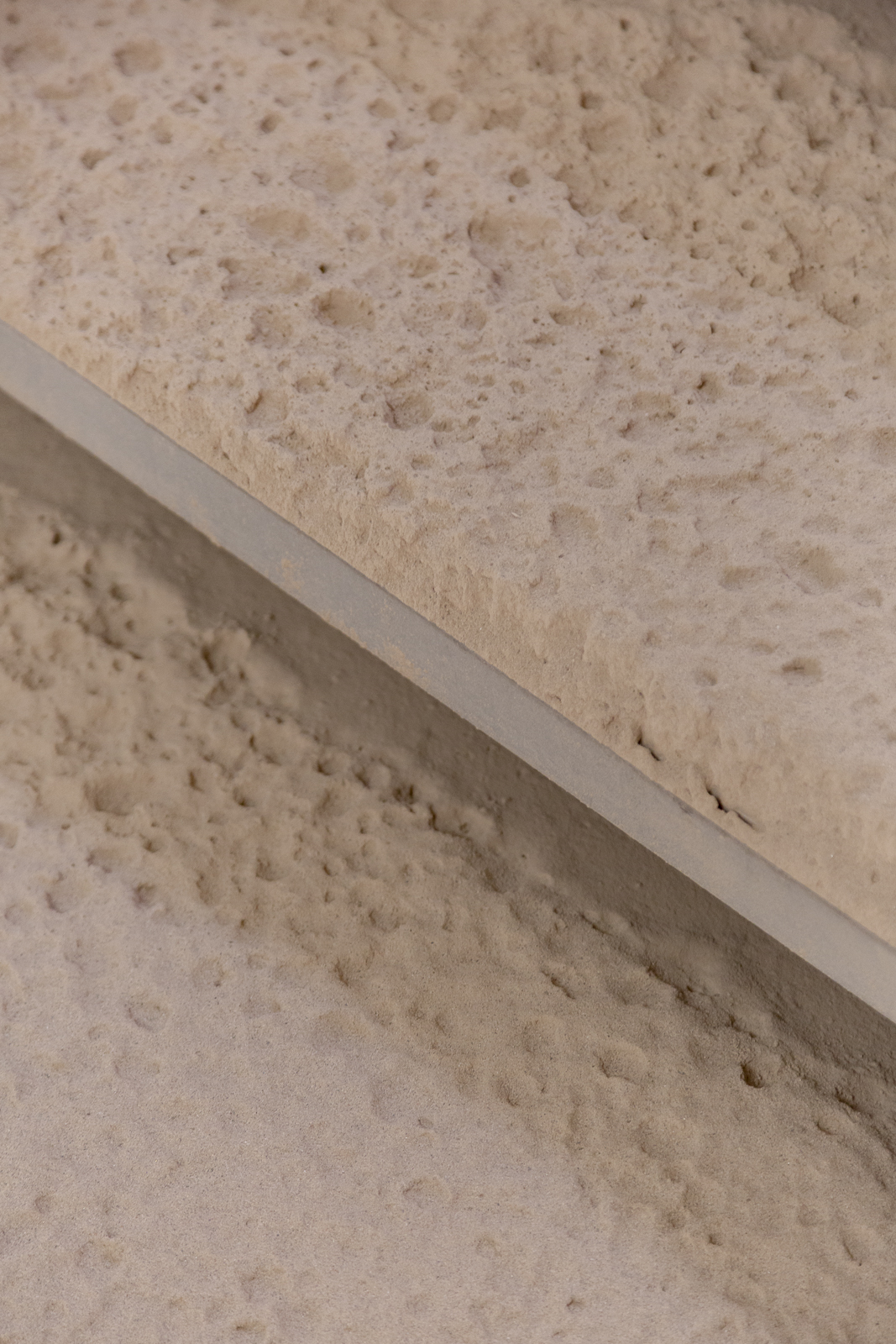
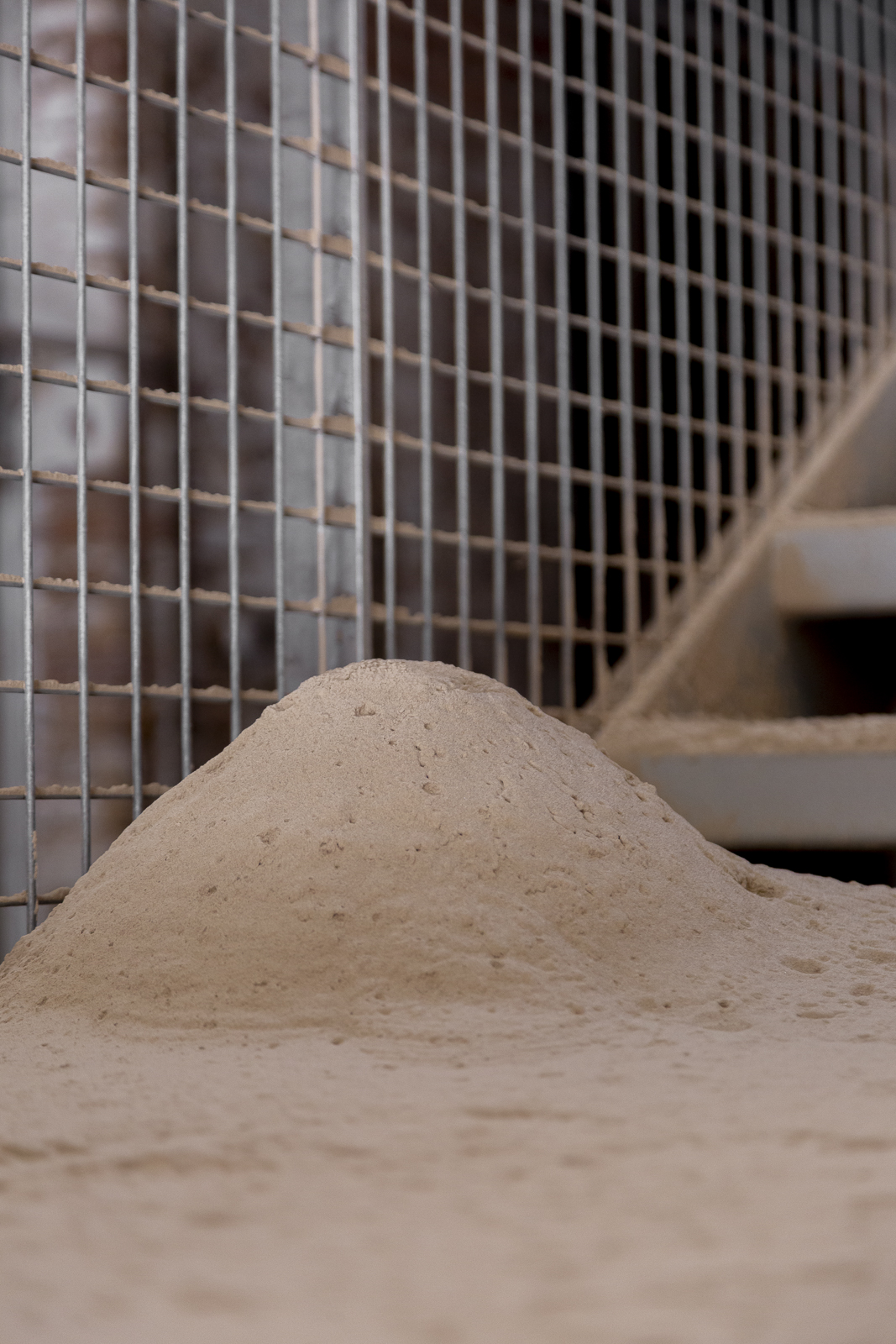
Installation at Contemporary Art Centre of Barcelona in Fabra & Coats, within the programme Incòmodes (Uncomfortable) curated by Joana Hurtado.
Installation at Contemporary Art Centre of Barcelona in Fabra & Coats, within the programme Incòmodes (Uncomfortable) curated by Joana Hurtado.
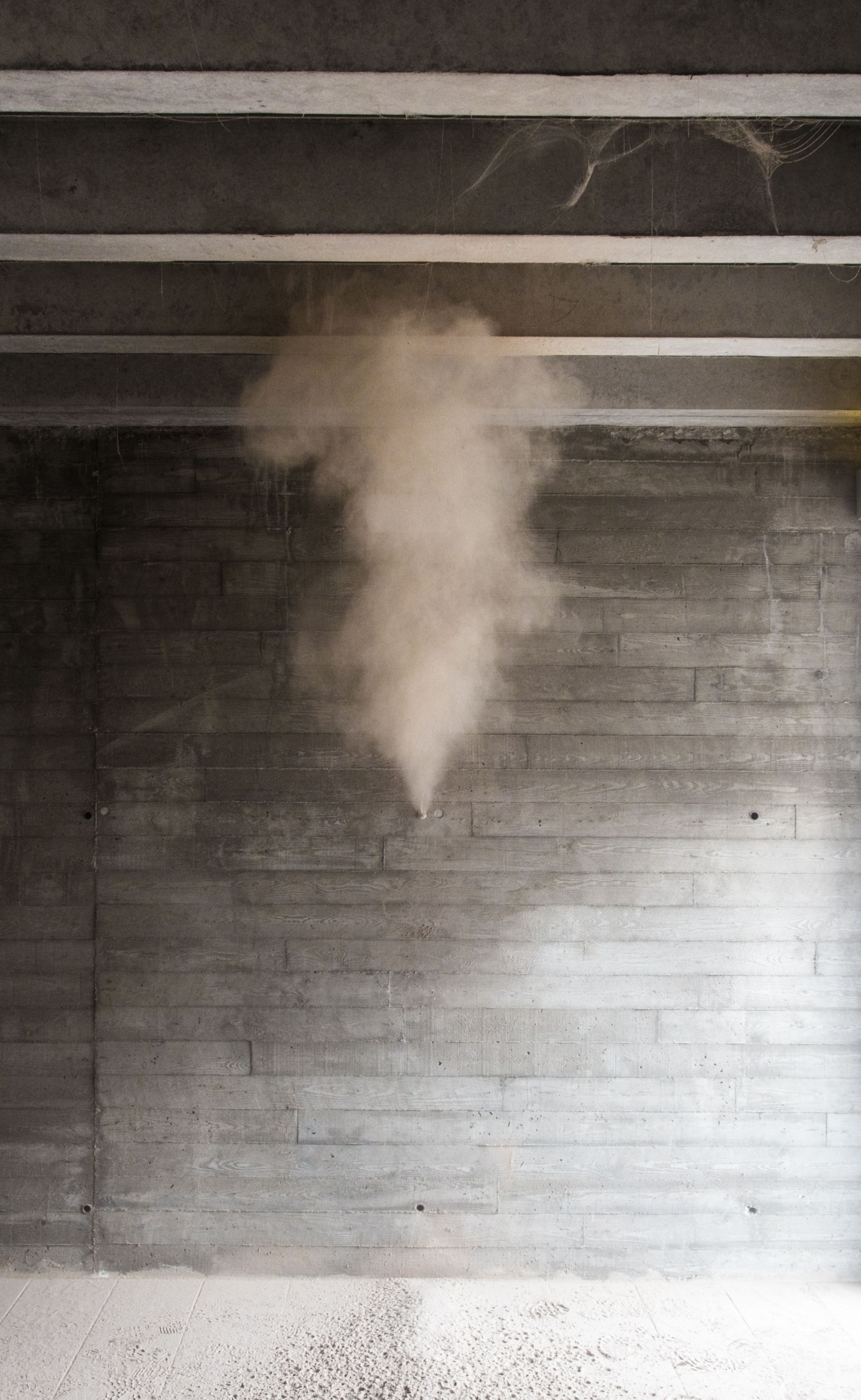
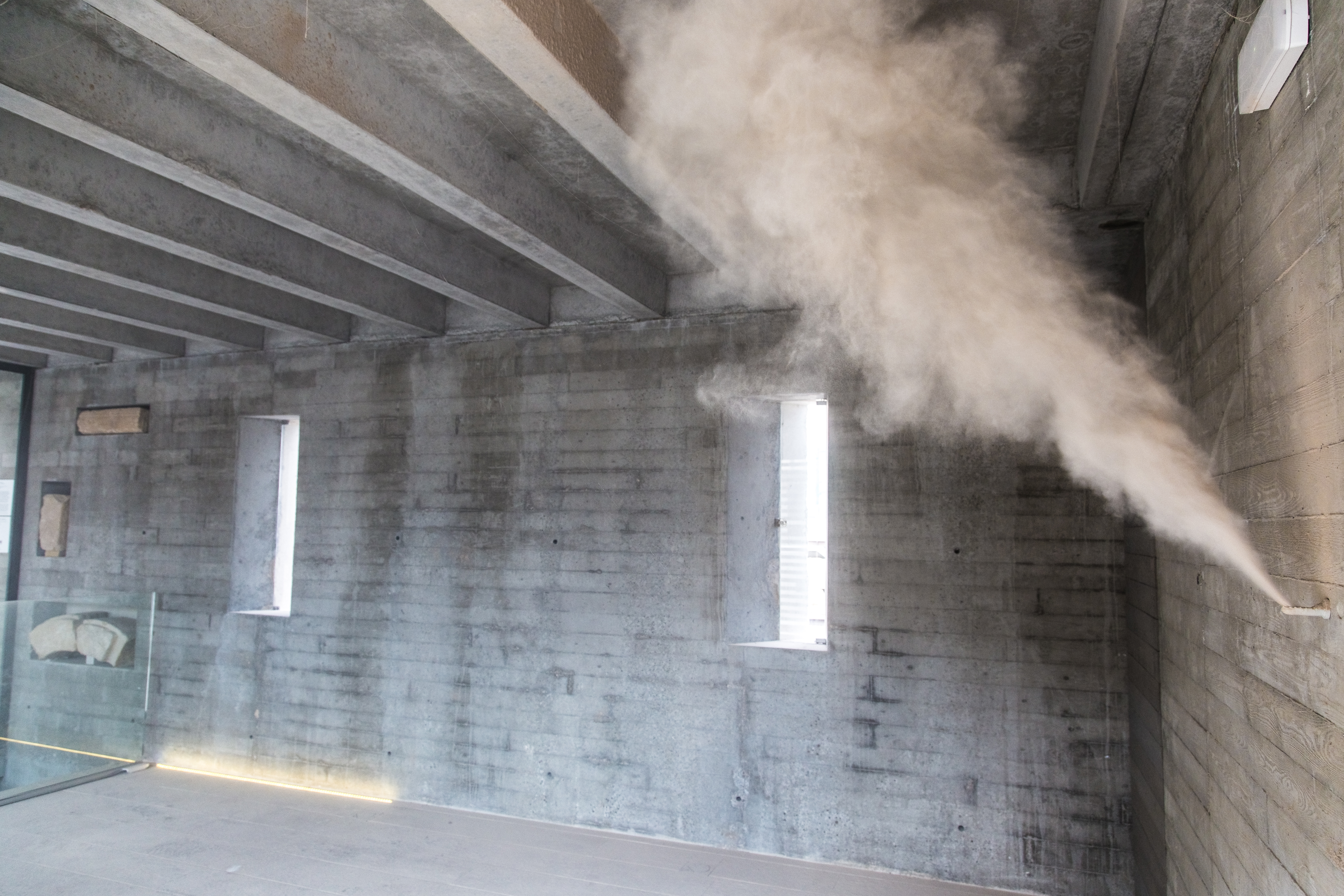
Installation in the Celòquia of the Castle of Amposta during the Biennial of Art of Amposta, organised by Lo Pati Centre of Contemporary Art. Further details of the installation here.
Each particle of dust can be considered as the crystallization of a long process of a continuous transformation that carries with it an exclusive path and memory.
The dust whirls, and its almost invisible size (made up of thousands of grains that we do not perceive with the naked eye) makes us part of this fascination to grasp and use the smallest and most intangible units: the graphene nano-particle, the Higgs boson, the “intelligent dust”… Or what information and what original testimony can the micro-particles that came off from a hammer blow that Piero Cannata – in an act of iconoclasm – gave to the second finger of left foot of Michelangelo Buonarroti’s David. This question is what underpins the Martellata_14.09.91 project and is at the beginning of a line of research by the artist on dust as elementary matter and its memory in the form of particles.
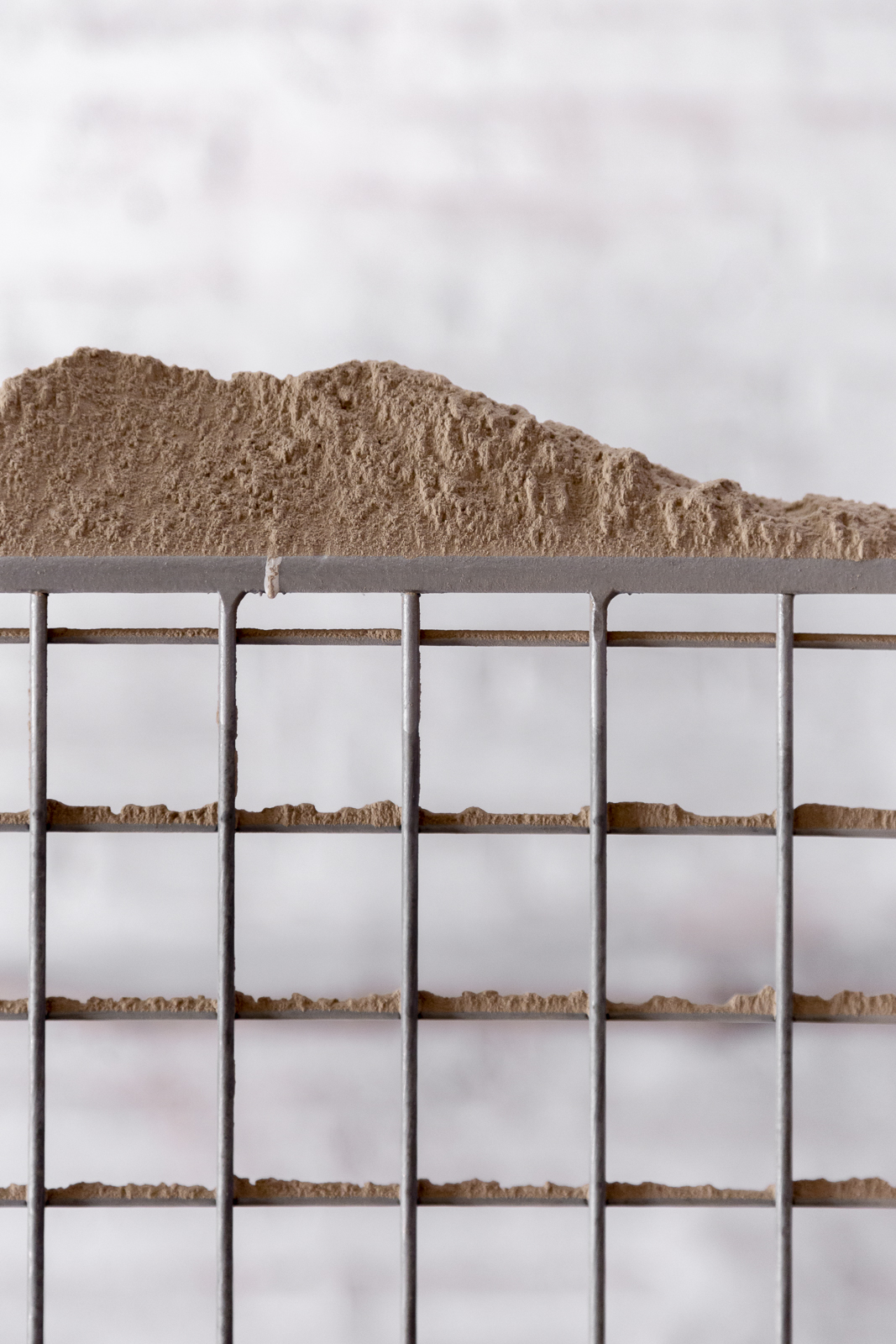
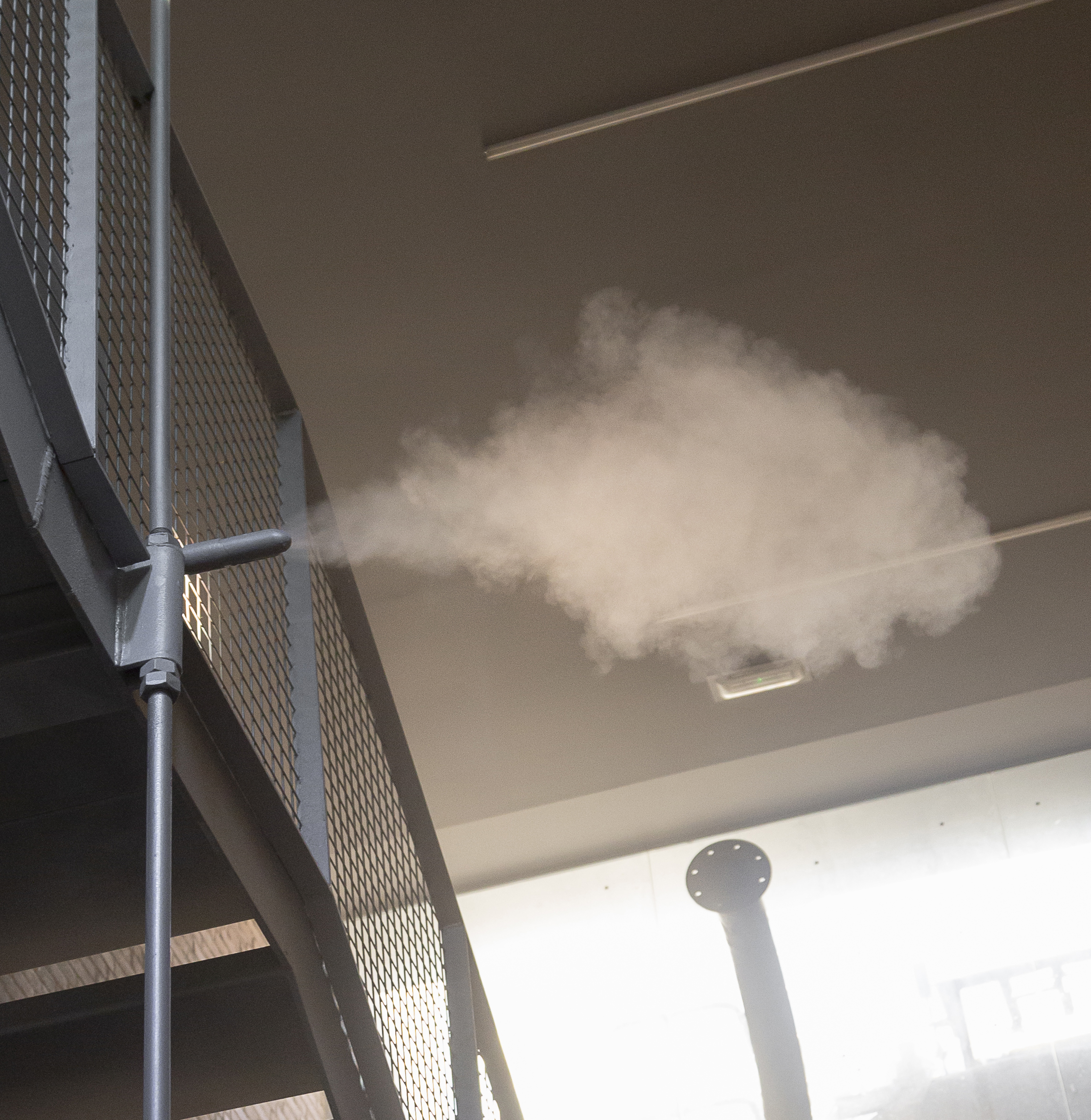
Through Polvere che gira formalizes her research through a (partially hidden) device that, when a spectator enters the room, emits a silent burst of dust and forms an ephemeral cloud that gently descends. When the particles fall, they continue to move with the movements of the visitors and the air currents and – taking advantage of their volatile and almost uncontrollable capacity – they will end up mixing with the sediments of the building or disappear outdoors. And without making a sound, it will disperse, accumulate, sediment and erode, again, gathering information along the way.
Work co-produced with Hangar, Visual Arts Production and Research Centre; and with the support of Sorigué Foundation.
Here an interview about Polvere che gira by the Sorigué Foundation.
My interest in marble dust particles begins with the research project Martellata_14.09.91, the artistic production of which has been realized during a residency at the Royal Academy of Spain in Rome from March to October 2022.
Martellata_14.09.91 is a chrono-material reflection on one of the most paradigmatic acts of iconoclasm of the 20th century: the hammer blow that Piero Cannata gave to the second toe of the left foot of Michelangelo Buonarroti’s David.
In 2017, quite early in the data collection phase, I had a vision that changed the course of the project: a sculpture of suspended dust in the shape of a wall, or a waterfall of marble particles.
This image was mainly motivated by three different facts:
1) The fragments that were collected after the iconoclastic act were not sufficient for the reconstruction of David’s toe – the missing matter was in the form of dust, which was barely collected.
2) The restorers and scientists of the CNR (Consiglio Nazionale delle Ricerche), decided to carry out crystallographic and petrographic analyses of three of the fragments of the toe. The tests revealed, on the one hand, the quarry of origin of the marble block that was given to Michelangelo for the sculpture and, on the other hand, that the sculpture is in a very fragile physical state, right in the phase prior
to becoming ‘marmo zuccherino’ – which could be translated as ‘flourish marble’ or ‘dusty marble’.
3) The toe – as the restorers themselves explained to me – was reconstructed by adding marble powder and removable glue.
Dust, then, is an elementary material, present in all the stages related to the sculpture: extracting the block of marble, carving, restoring, etc. On the other hand, the image of the ç turning into a curtain of sand has been strong and present ever since.
This is how I recovered my fascination for geological phenomena, which I had already nurtured as a speleology practitioner and as a specialist in lithography during my BA in Fine Arts. Therefore, I studied the formation and erosion processes of marble, but this time also focusing on the old and current stone extraction methodologies in the different quarries of Carrara. At the same time, I investigated the interest that Michelangelo himself had in the choice of his blocks to sculpt,
since he was the only Renaissance artist to visit Carrara in order to give detailed instructions to the stonemasons. Furthermore, the scientists of the National Research Centre of Italy have instructed me in the processes of marble degradation and the reasons for the stone to become ‘marmo zuccherino’.
Very fast, the image of a curtain of marble dust turned into a cloud of marble dust. As I imagined clouds of marble dust at different times, one question was running through my head: Did Piero Cannata’s hammer blow also release marble nano- particles into the air? How could I capture the testimony of these particles, access to the information they contain? How to be able to work from the materiality of the dust itself?
In parallel with other areas of the project, I began to do more research on invisible stone particles. This is how I contacted the Geology departments of both the Autonomous University of Barcelona and the University of Helsinki. In the Bellaterra sedimentation laboratory, I did a granulometry of a sand sample from the Fantiscritti quarry, Carrara. In Helsinki I contacted Katja Bohm, a researcher specialized
in the study of airborne particles in order to learn how to study these tiny units
of information. There I was mainly introduced to the use of a scanning electron microscope (SEM) and the coating necessary for the visualization of the samples; at the same time they told me about the construction of dust traps.
Since then, I have continued to cultivate an interest in marble particles. During the first months of the pandemic, the visualizations of the coronavirus aerosols reminded me of the marble clouds I had been seeing since 2017, and so I started a series of drawings in relation to them. On the other hand, in June 2020, I also worked on the video In Suspension. This short essay is a work derived from Martellata_14.09.91 which is based on geological findings related to marble particles while considering how to approach the information – the memory – contained in a tiny grain of impalpable dust.
To make matters worse, and also because of the pandemic, I changed my residence to La Ràpita, in the Ebro Delta, at the sea shore. From this location, I dedicated myself to documenting on video how the strong winds in the region move and lift
the grains of sand. On the other hand, and as a result of visiting the quarry Marbres Castell in Ulldecona, I also couldn’t stop running to lift the dust that accumulates in its facilities.
And it is when I find myself in such circumstances that I wonder if the fact of having spent my childhood in the workshop of what had been a family artisan business, caused even me to be trapped between the particles of flour that were suspended in the air when my father (and also myself when older) worked the different pastries and cakes.