For views on tis exhibition, go to Rotations #1 The Route
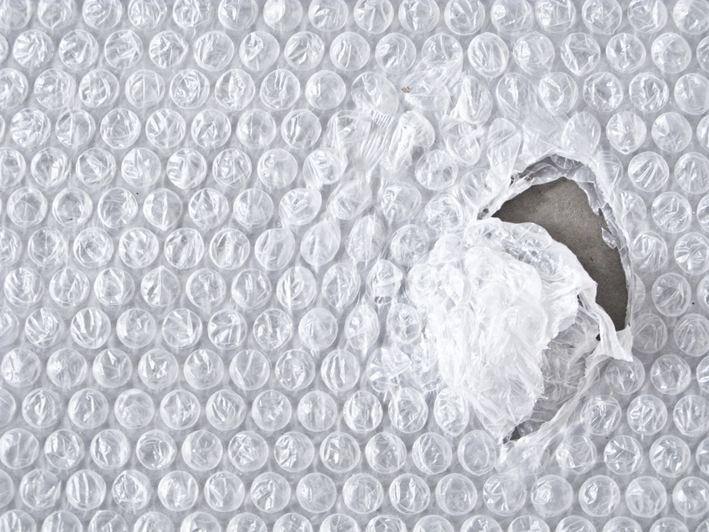
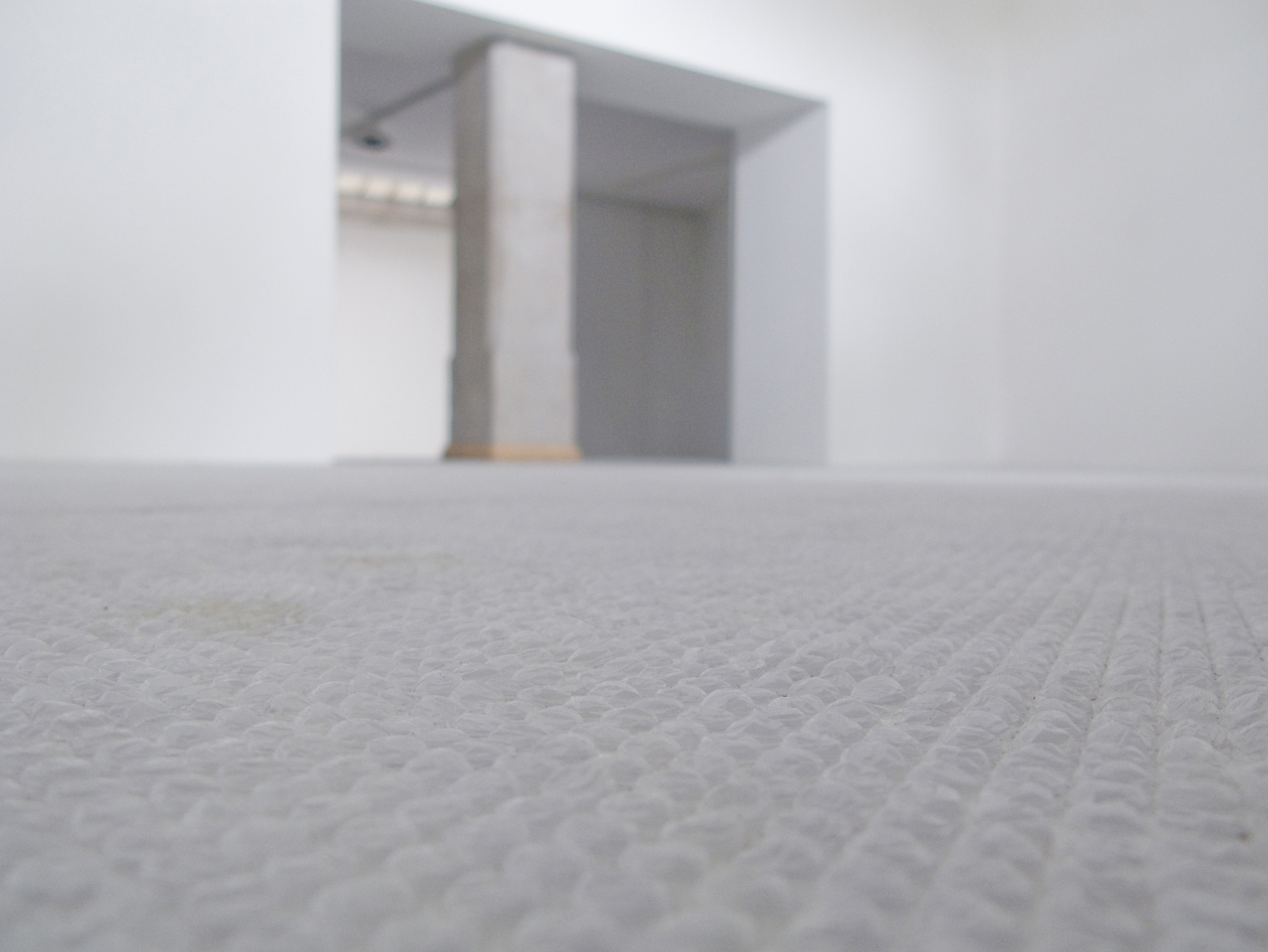
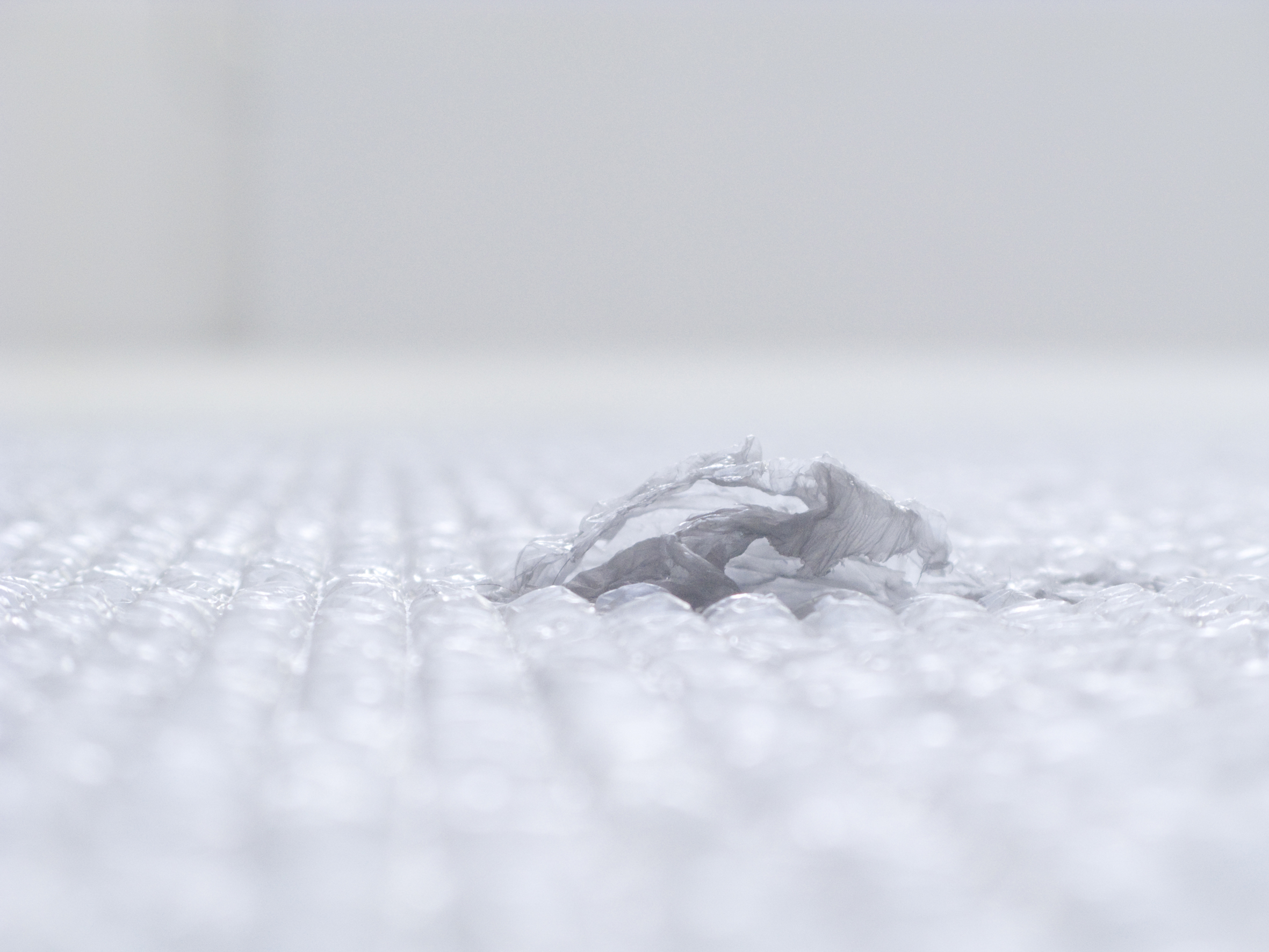
In Horizontal orientation the plastic bubble wrap, which is typically used when transporting artworks, covers the floor of the main exhibition space. One could imagine that the gallery was undergoing renovation, or that the floor was being protected for being covered with a different material, the same way archaeological artefacts remain buried for a period of time.
However in this case, the artist is not interested in the material’s traditional uses but rather in activating its physical qualities: the fact that the small air capsules explode under pressure. This is, of course, well known. More than once we all have held a piece of bubble wrap in our hands, and have played by popping it just for pleasure, almost unable to stop.
But it is an entirely different situation when the material is on the floor of a space you wish to enter, in which you find yourself engaged in a sort of inevitable participation, where you cannot avoid making noise while walking around, revealing your presence and leaving an audible trace of your movements.
You have been entangled in a situation that is slightly improbable, setting aside the utilitarian expository structure. You mostly likely took care when coming in, entering calmly, and relatively quietly. Perhaps, instead of popping, you would have preferred to go unnoticed. Or on the contrary, perhaps you would react with excitement, trying to explode more and more bubbles, walking on areas that haven’t been stepped on yet, and thus changing the typical route through the space, alternating the way in which you would normally circulate through it.
–
Installation in La BF15 within ABANS QUE ELS GESTOS ESDEVINGUIN PARAULES. September 2014
Installation in àngels barcelona gallery within Rotations #1 The Route. July 2013
ABANS QUE ELS GESTOS ESDEVINGUIN PARAULES (Before Gestures Become Words)
La BF15, Lyon.
11.09.14-08.11.14
Curated by Perrine Lacroix
Part of The 16th Lyon Dance Biennale’s Off and Photo Docks Art Fair’s Itinérances
In partnership with àngels barcelona gallery
–
_Gallery Text
In continuation of a program for two years, about the issues and mechanisms related to exhibition, the Spanish artist, Mireia c. Saladrigues invites us to La BF15, for his first exhibition in France, to interact with its space.
Our gestures reflect tracing patterns, internalized rules, behavioural habits… as many learned rituals which determine our movements in art spaces. Spaces or ritual structures – to use Carol Duncan’s words – incite visitors, consciously or unconsciously, to interpret a specific representation, a performance.
Her proposal explores the art space or the museum as “an impresario, or more strictly a régisseur, neither actor nor audience, but the controlling intermediary who sets the scene, induces a receptive mood in the spectator, the bids the actors take the stage and be their artistic selves.” 1
In Horizontal Orientation the plastic bubble wrap, which is typically used when transporting artworks, covers the floor of the main exhibition space. One could imagine that the gallery was undergoing renovation, or that the floor was being protected for being covered with a different material, the same way archaeological artefacts remain buried for a period of time.
Returning to the subject of walking (this minimal physical gesture needed to visit an exhibition), Mireia c. Saladrigues subtly guides us toward a physical recognition of the place, where our condition as spectators makes us involuntary performers, or sound makers.
This turn could potentially be read as a participatory accent or a willingness to incorporate the visitors into the exhibition, but actually puts pressure on conventional relationships between artistic production and consumption, between artistic perception and experience.
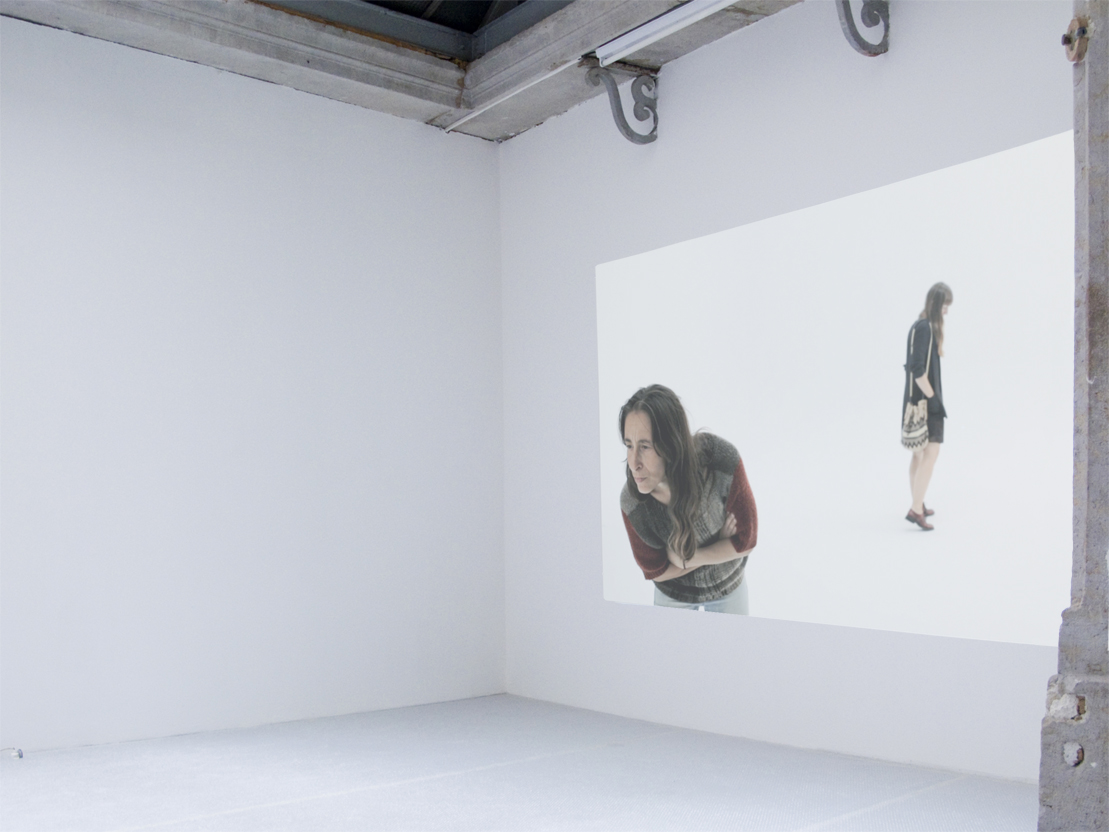
A new production, the film A Specific Representation, is another invitation to think about the dichotomy between what is biological and what is learned; between the natural and the representation. There some dancers recall the body memory, while recovering and reenacting the same learned gestures and transits, undergoing a physical exercise for highlighting how learned rituals determine our movements in art spaces.
1- Carol Duncan, Civilizing Rituals. Inside Public Art Museums, Routledge, 1995